2025.12.24
AKAI BAR
A secret crimson retreat: where Japanese tradition meets exotic charm
How is a particular dish or drink created? By unraveling a restaurant’s signature you reveal the chef's personality and philosophy, their commitment to the ingredients, and even the attitude of the producers. Exploring the story behind the cuisine, the dots that shape Kabutocho turn into lines that connect them.
In the 12th installment of “Dialogue of Food,” we visit AKAI BAR, a rare spot in Kabutocho where one can enjoy a refined slice of nightlife. Located on the first floor of Hotel K5, a symbolic presence in the neighborhood, this chic bar blends authentic design with subtle Japanese details, creating a world that feels truly one-of-a-kind. Step inside and experience the story behind an exquisite, unforgettable glass.
To mark its fifth anniversary in 2025, Hotel K5 underwent a renewal of its in-house dining and drinking venues. On the first floor, the hotel bar—long known for its signature red velvet sofas, carpets, and marble tables—was reborn under a new concept as AKAI BAR. The familiar crimson palette remains, yet the space has taken on a new life and story.
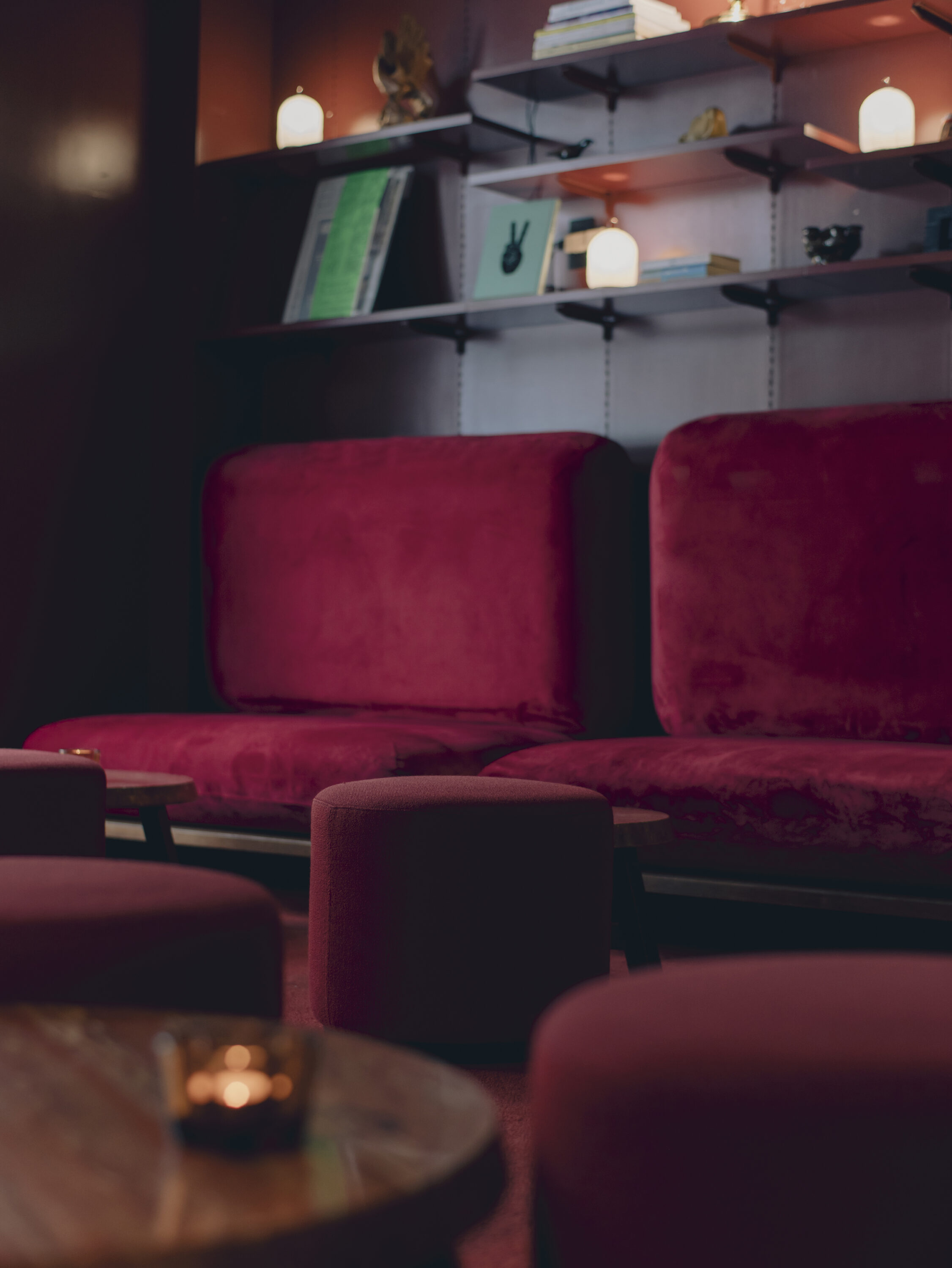

Inspired by the imaginary narrative of a worldly collector who has become the bar’s “owner,” the interior blends an eclectic mix of antique ornaments, modern drawings, art books, and paperbacks. The result is a thoughtfully diverse and unpretentious selection that adds an element of surprise and playfulness to the room’s luxurious, richly layered red atmosphere.
Behind the counter are two bartenders: JJ, a young creator who draws inspiration from the history and spirit of Kabutocho to craft drinks that reflect the area’s identity, and Shin Takeda, a veteran who brings his presence as a kind of mentor, adding fresh spice and depth to the collaboration. The intergenerational chemistry sparked by these two individuals, each respecting the other’s perspective and ideas, plays out nightly against the backdrop of Kabutocho, a place where tradition and innovation merge.
●AKAI
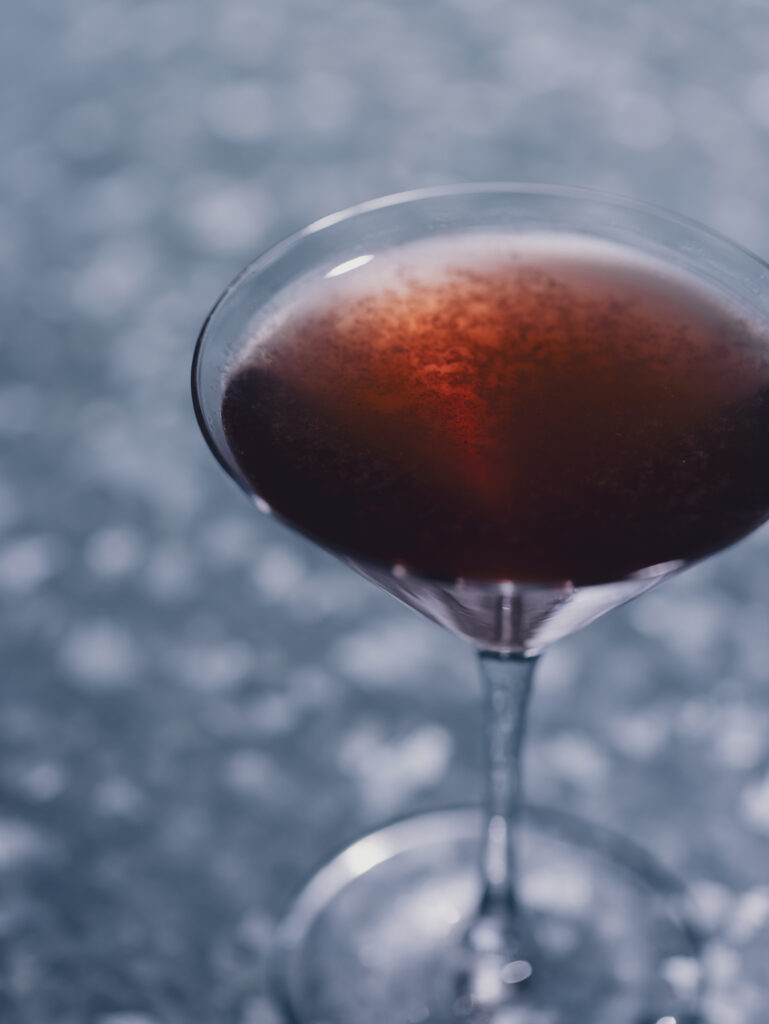
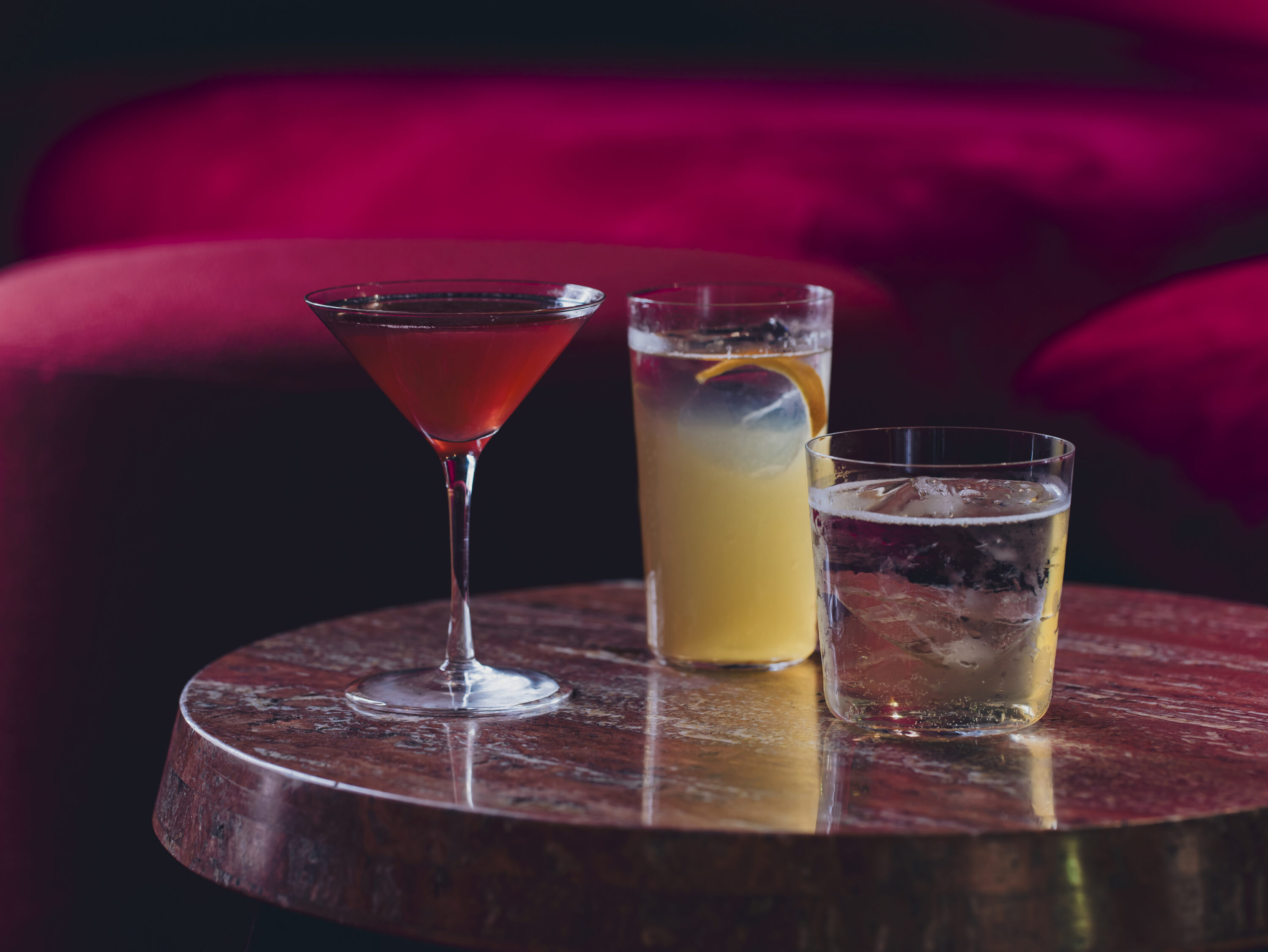
Let’s begin with the bar’s signature short cocktail—its deep, elegant red hue seems to capture the very essence of the space in a glass. The base is a red sake brewed by Heiwa Shuzo, a Wakayama-based brewery that also operates a brewpub nearby. This sake, made with red yeast, is blended with the bar’s house-made shiso and yomogi–infused gin, pomegranate syrup, and lemon juice.
When creating the menu, JJ first spent time walking around Kabutocho. “I wanted to use something from this town, and that’s when I visited Heiwa Shuzo’s shop and discovered this sake made with red yeast. It had an unparalleled, thick, caramel-like weight and sweetness…it was amazing,” he recalls. He also learned that while Nihonbashi is strongly associated with commerce, “research revealed it was actually known as a ‘town of medicine,’ with a heavy flow of medicinal herbs.” This discovery led him to incorporate the Japanese herbs shiso and yomogi.
A final, subtle flourish of salt and a squeeze of lemon zest fully engage the senses, leaving a lasting impression. The resulting cocktail, featuring a dominant, deep sweetness balanced by the clean scent of Japanese herbs, has become a favorite among locals and international guests alike.
●Kabuto Highball
Next is one of the signature long cocktails. It’s a highball made by steeping aged bancha (roasted green tea) in Denki Bran (a distinctly Japanese brandy-based liqueur born in Asakusa during the Meiji era), then blending it with orange liqueur, lemon juice, and a warm cinnamon-ginger syrup.
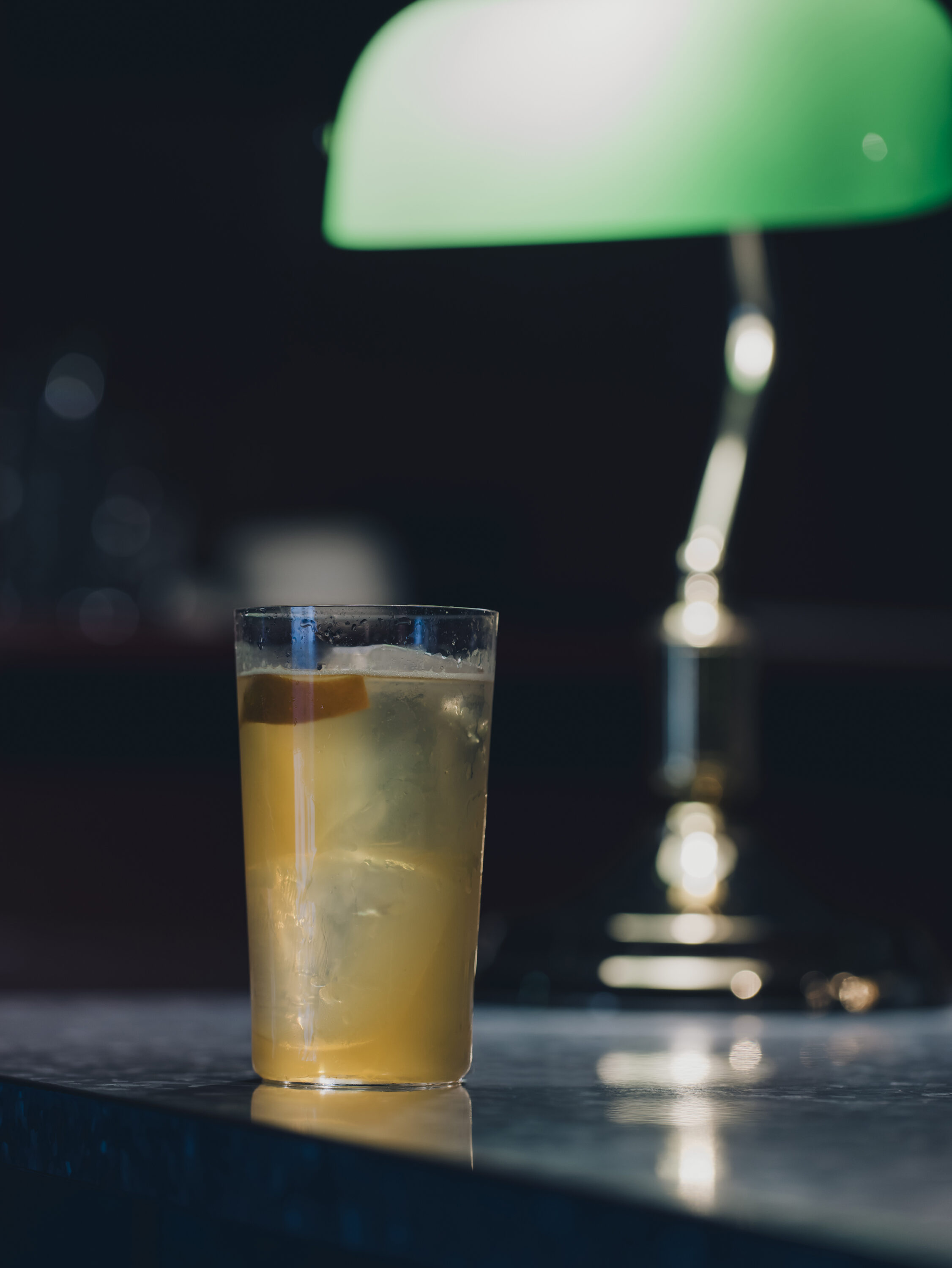
JJ wanted this drink to “reflect the downtown Tokyo feel that still lingers in Nihonbashi.” “That’s why I chose Denki Bran, which originated in Asakusa, where city development was happening during the same period.” The aroma of roasted tea leaves, the fruity notes of lemon and orange, and the spice of the cinnamon-ginger syrup create a flavorful, subtly spiced texture that is fresh, light, and pleasantly lingering. The final touch involves briefly torching an orange peel to add a burnt orange fragrance.
This combination also aims to evoke a sense of nostalgia. “By adding the gentle sweetness of orange, lemon, cinnamon, and ginger, I hoped guests would feel a touch of the familiar, like old-fashioned penny candy (dagashi). In fact, it’s often ordered by customers in their 40s and 50s who already know the taste of Denki Bran, and I’m happy when they resonate with the retro flavor profile.”
●Lychee & Jasmine
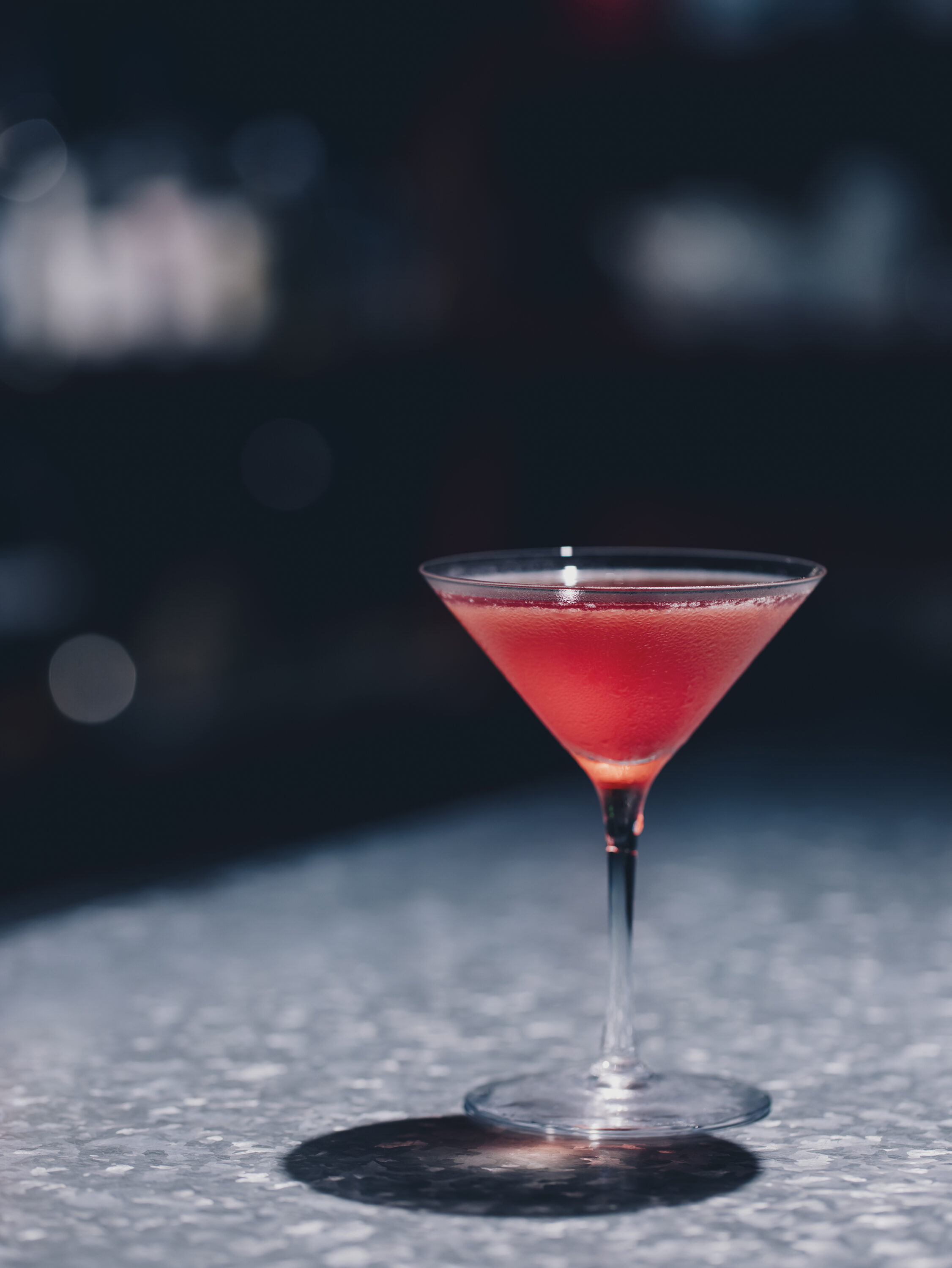
To add depth to JJ’s creations, which emphasize a Nihonbashi and Japanese sensibility, Shin Takeda, the other menu developer, incorporates Asian flavors, looking to Asia as the nearest extension of Japan within the broader global context. This complex drink starts with a base of gin, lychee, and lemon syrup, combined with milk steeped in jasmine flowers. A clarifying process that cleverly uses milk separation is then used to extract a perfectly clear liquid. This is a very time-intensive masterpiece.
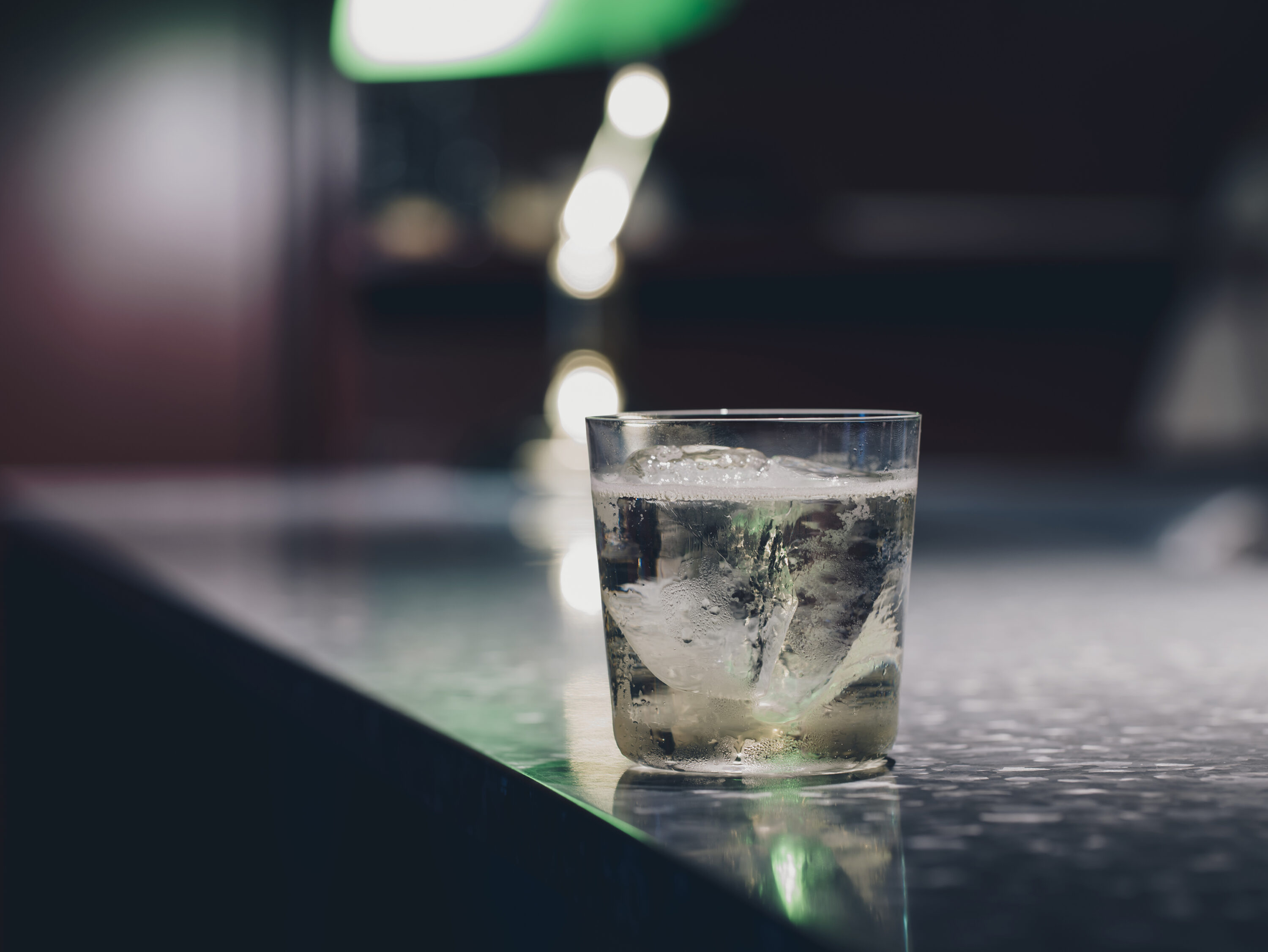
The flavor profile is as, or perhaps even more, clear than its appearance, gently embracing the exotic brightness of lychee and jasmine. “When you add lemon juice to milk, it separates, right? We use that phenomenon,” Takeda explains. “The milk proteins bind to and remove the impurities in the alcohol, making it exceptionally easy to drink. Since you don’t feel the harshness of the alcohol, people who don’t usually like strong spirits can drink it easily, almost dangerously so!”
After a meticulous preparation that takes over a day, soda water is added, and the cocktail is finished with a spritz of custom-made gin blended with basil and lemon. The herbaceous note of the basil adds a modern freshness to the rich lychee and jasmine. This perfume-like approach of weaving layers of scent connects to Takeda’s vision for “Kabutocho’s unique expression.” “Kabutocho was originally a financial district, and this building was once a bank. I thought it would be interesting to imagine this bar is a storage space for fragrances instead of currency. I hope guests can retrieve scents, and the emotions attached to them, that they’ve deposited here.”

In Kabutocho, historic architecture stands shoulder to shoulder with modern creativity, and a quiet sense of prestige fills the streets. Yet in this hotel bar, often frequented by international guests, the atmosphere feels both Japanese and cosmopolitan.
“It’s certainly Japanese, but not in the traditional Kyoto sense,” the two bartenders reflect. “There’s something futuristic, even exotic, about it. It’s still hard to define completely.”
As they continue to refine their craft together, their chemistry and imagination promise to further shape AKAI BAR into an essential part of Kabutocho’s ever-evolving story—a place where heritage, innovation, and the deep crimson of night converge.
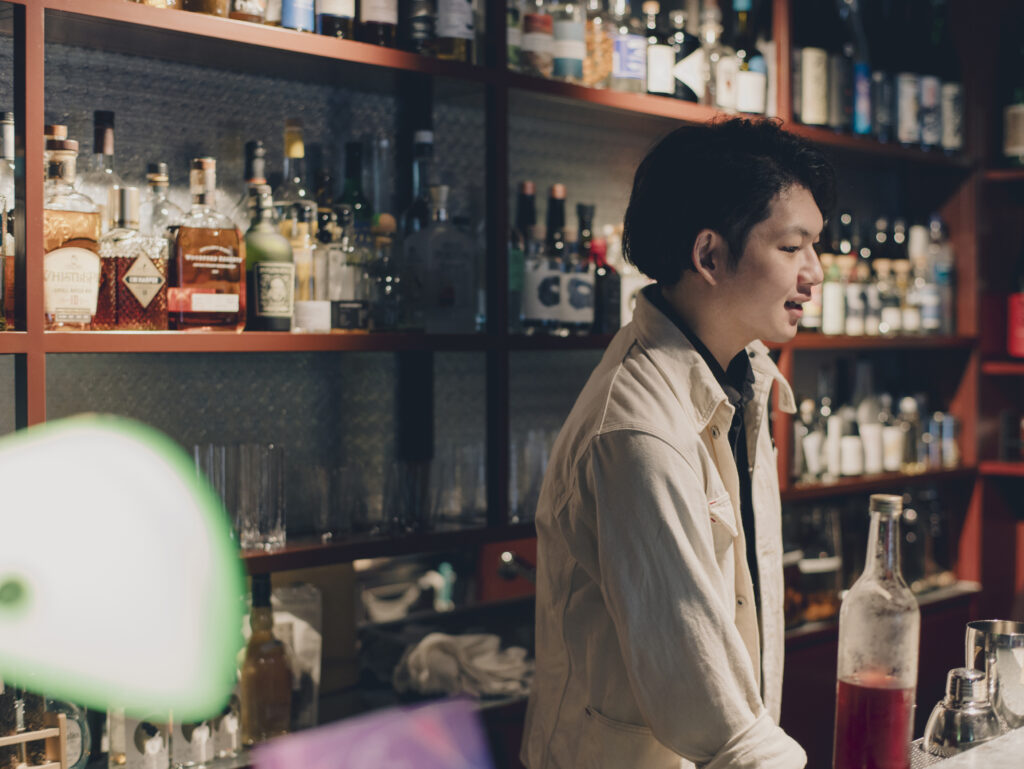
Shogo Kangawa(JJ)
While studying at a music university, Shogo Kangawa dreamed of one day opening his own jazz bar. He spent two and a half years training under Kazuya Nishimura at Bar Ao, where he honed his craft and deepened his understanding of bartending. Later, as manager, he became involved in both store operations and menu development.
After the bar transitioned to direct hotel management and was reborn as AKAI BAR, he continued in his role as manager, expanding his creative perspective and refining his cocktail expressions with a deeper appreciation for ingredients.
His hobbies include playing the piano and fighting video games.
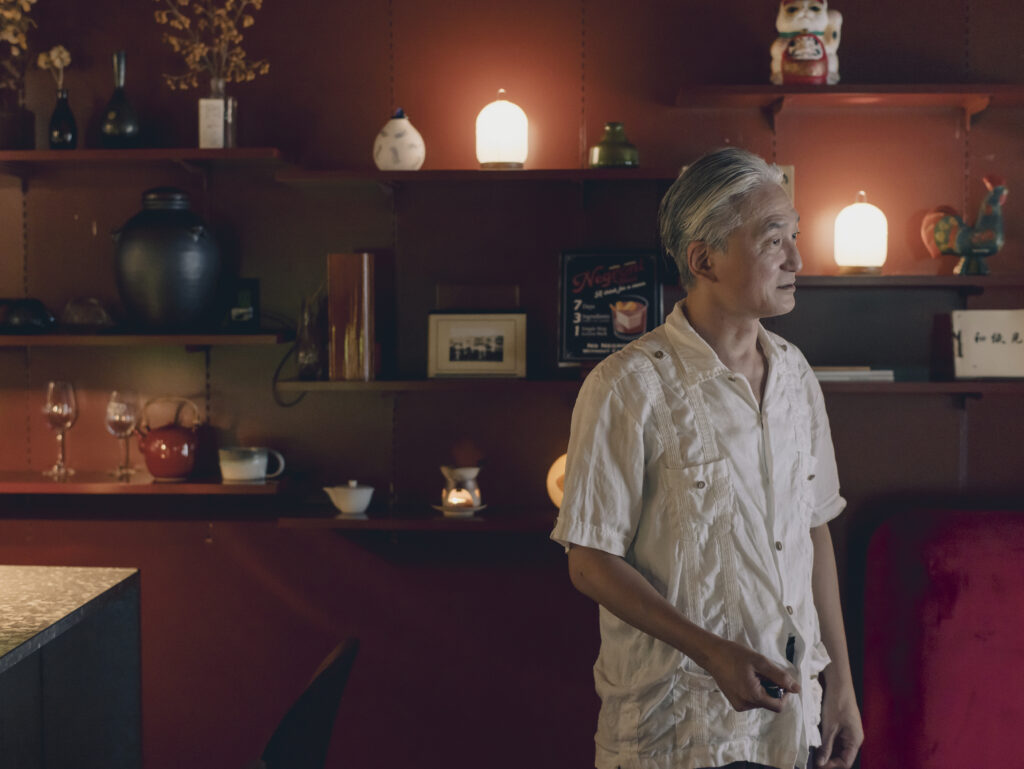
Shin Takeda
Shin Takeda began his career in a jazz live restaurant before going on to serve as manager at PRBAR in Kita-Aoyama. Eager to broaden his expressive range while deepening his technical and theoretical expertise, he began working as a freelance bartender in 2022.
He now appears as a guest bartender at various venues throughout Tokyo and creates original cocktails for music festivals, fashion events, and other cultural gatherings.
Since May of this year, Takeda has been part of AKAI BAR in Kabutocho, where he strives to craft drinks that create lasting, memorable moments for each guest.
Interview & Text : Misaki Yamashita
Photo : Masahiro Shimazaki