The Gravitational Pull of Gyoza
Bridging Cultures through Taiwan-Japan Fusion in Kabutocho
From Japan, China, and Taiwan to Turkey and Poland, "gyoza" (dumpling) is a dish beloved across the globe. While they may share a similar silhouette, their flavors, styles, and rituals vary by land. Fried, steamed, or boiled, this single dish can serve as both a staple food and a celebratory feast. It is as if each dumpling wraps within its skin the culture of the city it belongs to, inviting people to gather around the table.
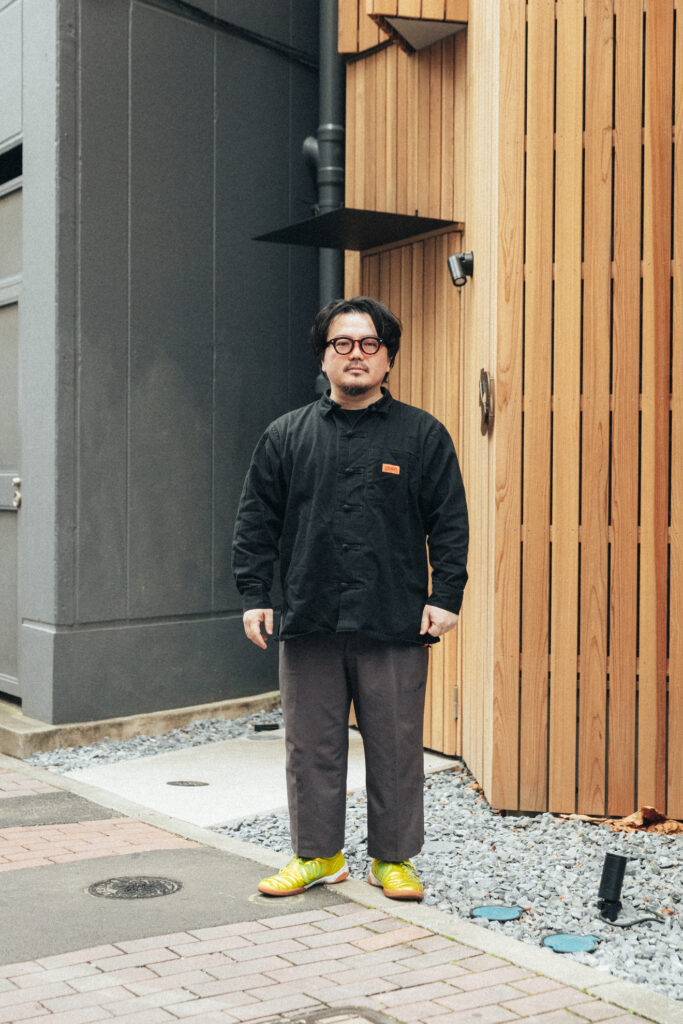
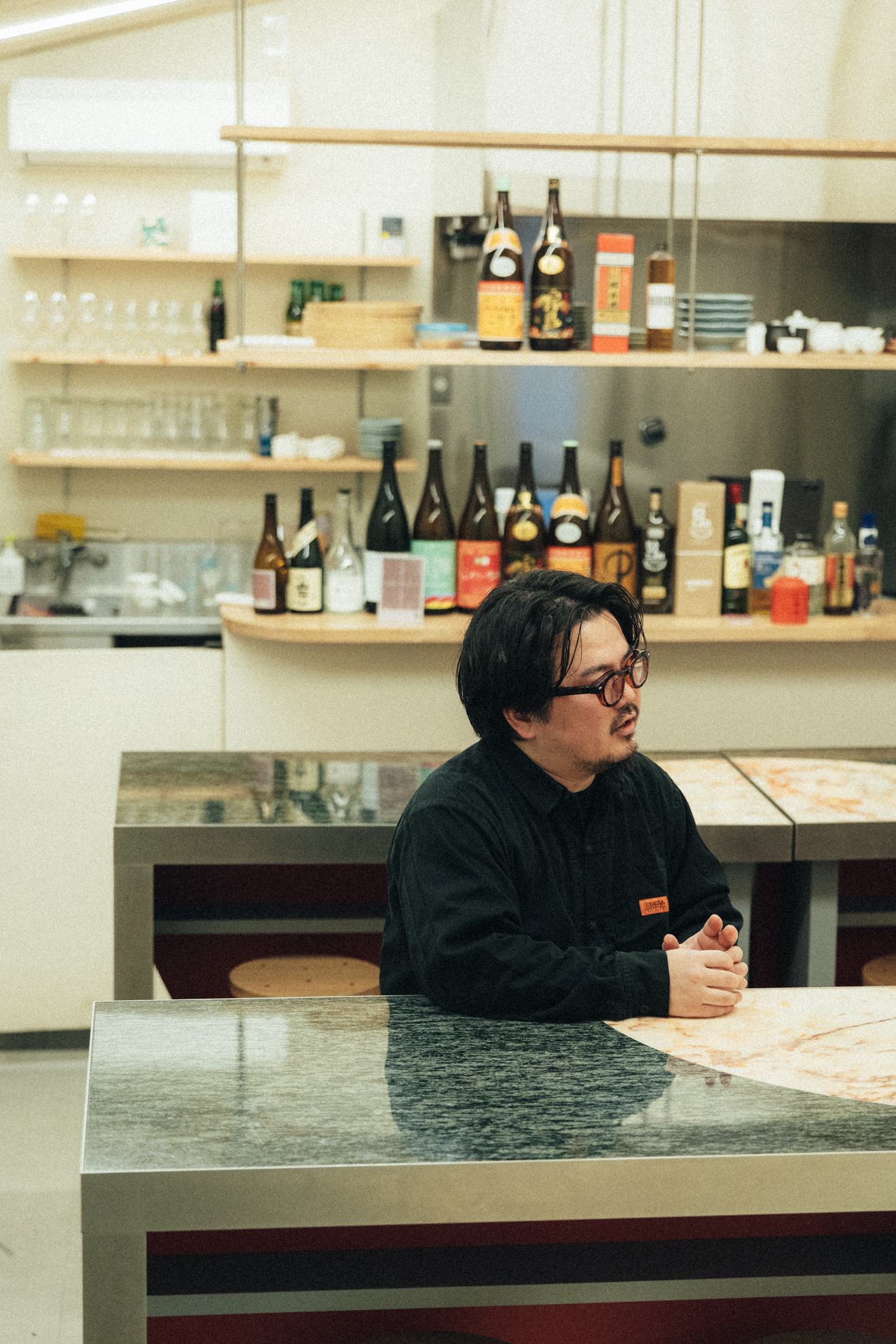
Just a stone’s throw from the financial district of Kabutocho, in the neighborhood of Kayabacho, you’ll find Shao Shao, a Taiwan-Japan fusion restaurant owned by Naoki Moriya. Here, Moriya reinterprets the food industry through the lens of his background in architecture and apparel, transforming the dining experience into a "place for connection." Believing in the power of food and its ability to draw people in and spark new urban landscapes, we spoke with Moriya about his journey and his role in illuminating the "margins" of the city.
●You currently operate “Gyoza Sekai” (Gyoza World) in both Tokyo and Okayama. Did you always envision yourself working in the food and beverage industry?
In university, I studied architecture at Waseda, with a specific focus on landscape and public space design. To be honest, I originally chose Waseda for their soccer program. I had played seriously in Okayama since high school and was aiming to go pro. However, I was unsuccessful in the selection for the varsity team. While lamenting my situation, I remembered my love for making things and drawing. From my second year, I pivoted toward architecture and art, immersing myself in Tokyo’s culture as a typical student would.
●When you say spatial design, what specific field did you focus on?
I focused on urban development. My field research was in Ena City, Gifu Prefecture, looking at how to revitalize old post towns and shopping districts that had faded with the times. Growing up in Kurashiki, I often visited the Ohara Museum of Art. Magosaburo Ohara, who was the president of a textile company, collected art and preserved it alongside traditional storehouses, effectively branding the entire area as an art city. Influenced by this, Soichiro Fukutake, founder of Benesse, later developed Naoshima and Teshima, once sites of industrial waste disposal, and shared the Setouchi region with the world through contemporary art. Growing up with this kind of history in Okayama may be why I was naturally drawn to urban design.
●Where did you work after graduation?
I joined an apparel company where the president was also an avid collector of contemporary art. My first role as a new graduate was managing that collection. Later, I helped establish an art foundation and worked on large-scale events like biennales. As more professional curators joined the company, I felt there was no longer a place for me, so I decided to start my own business.
Gyoza is something everyone is familiar with; it’s the kind of thing you make with your mother.
●And that’s how Gyoza Sekai began?
Exactly. I had no experience in the food and beverage industry, but I somewhat overconfidently believed it would be the easiest way to create a space where people could gather. Gyoza is something everyone is familiar with; it’s the kind of thing you make with your mother. They also go well with alcohol, which helps increase the average spend per customer. So I rented the cheapest snack bar space in Okayama and opened Gyoza Sekai in 2017 with the concept of dumplings and music, and it became quite popular. We also held art exhibitions on the second floor, so people who came for gyoza would leave having discovered young artists. I managed the shop alone, always thinking about how to create those kinds of connections.
●Was opening your first shop in Okayama influenced by the earlier stories about art and urban development?
Not intentionally at first. The apparel company I worked for was originally founded in Okayama, and while working in its Tokyo office in PR, I was also involved in managing the president’s art collection. The reason he collected art so extensively was to address the decline of Okayama’s historic townscape after the economic bubble by dotting the area with art and restaurants, encouraging people to walk the streets. Eventually, he told me, “You’re from Okayama and familiar with my art collection—now go and help revitalize the city!” I ended up taking on a leadership role in an art festival jointly organized by the city and private companies, traveling back and forth between Tokyo and Okayama.
Leaving a stable job to start a business was much harder than I expected.
●Was it difficult to quit your job?
Yes. Leaving a stable job to start a business was much harder than I expected. But I had been telling my friends back in Okayama for a while, “I’m going to start something soon.” Even though I had pursued soccer seriously and attended a private university thanks to my parents, I found myself working in apparel while some of my classmates were working in factories or manufacturing and were earning more than I was. That gap made me increasingly anxious, and I pushed myself to quit. I didn’t want to be that guy who was “all talk”.
●Did your world change after quitting?
Completely. I had already rented the snack bar space a few months before leaving my job, so every weekend I would escape the office like I was breaking out of prison, go clean the place, and gather friends to scrub away 20 years of grease from the floors with loud music and canned beer in hand! I managed to open Gyoza Sekai just two months after quitting. Since gyoza doesn’t require a massive kitchen, I could do most of the renovation myself.
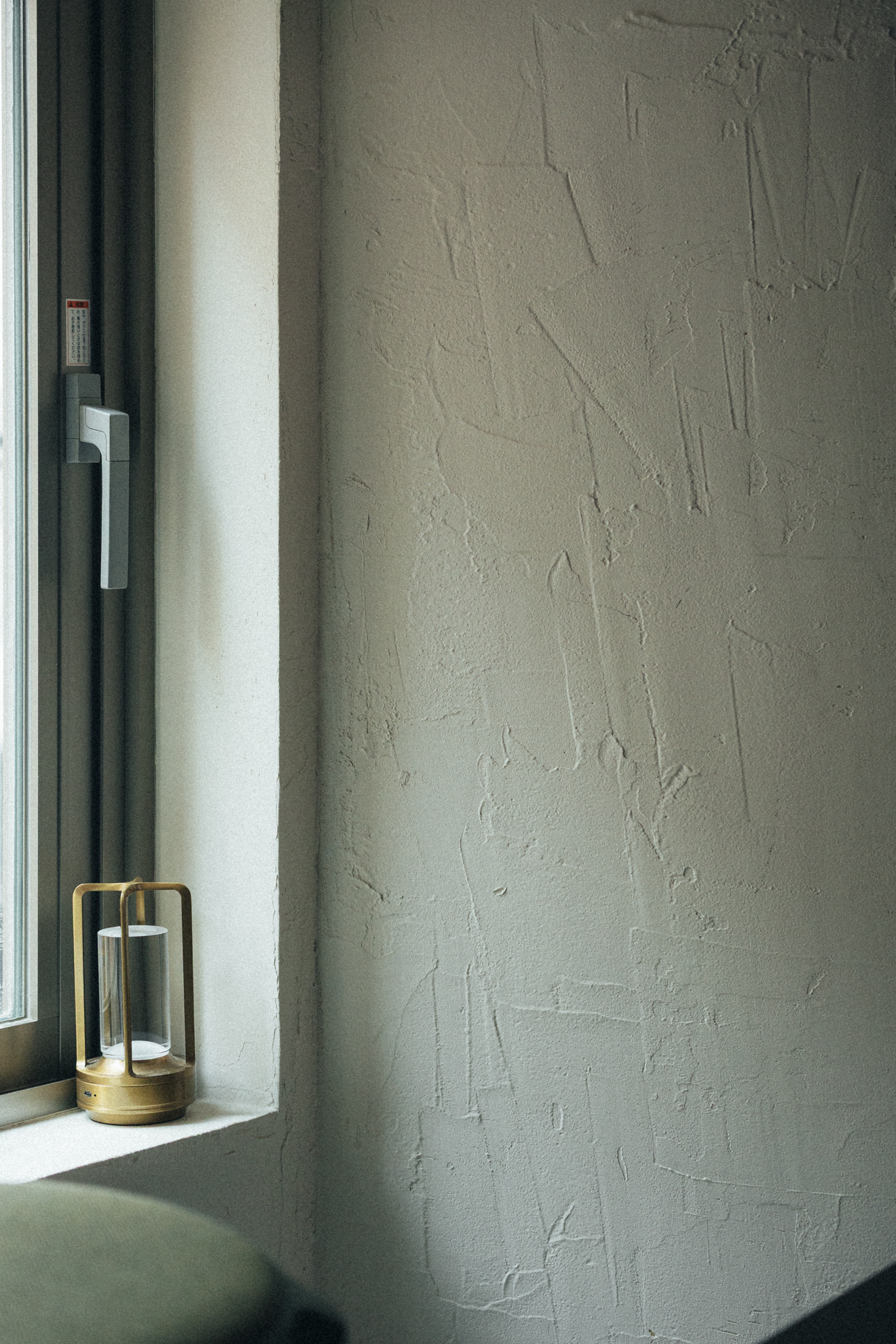
I thought maybe it would work if I ran the shop using an approach similar to fashion PR, but with dumplings as the content.
●Was the concept of dumplings and music clear from the start?
I thought maybe it would work if I ran the shop using an approach similar to fashion PR, but with dumplings as the content. Nowadays, it’s common to photograph each dish beautifully, but before COVID, that kind of presentation on social media was mostly seen in fashion. Since I was involved in PR and creative work in apparel, I did similar things: asking friends to model, photographing dumplings, and even creating merch. That said, it was my first time in the food business, so I learned gradually while seeking advice from experienced people.
We then opened a second shop in Okayama in 2019 with a concept inspired by Asian diners in places like Thailand and Taiwan, but COVID hit soon after.
●How did you survive during the pandemic?
We operated within restricted hours and focused on takeout. Fortunately, our fixed costs were low, so we managed to stay afloat. Around that time, a senior student from the university who was running a shared kitchen in Kagurazaka contacted me, “Moriya, didn’t you say you wanted to open a place in Tokyo?” Since I had always planned to return to Tokyo by the age of 30, I took it as an opportunity and started operating there temporarily.
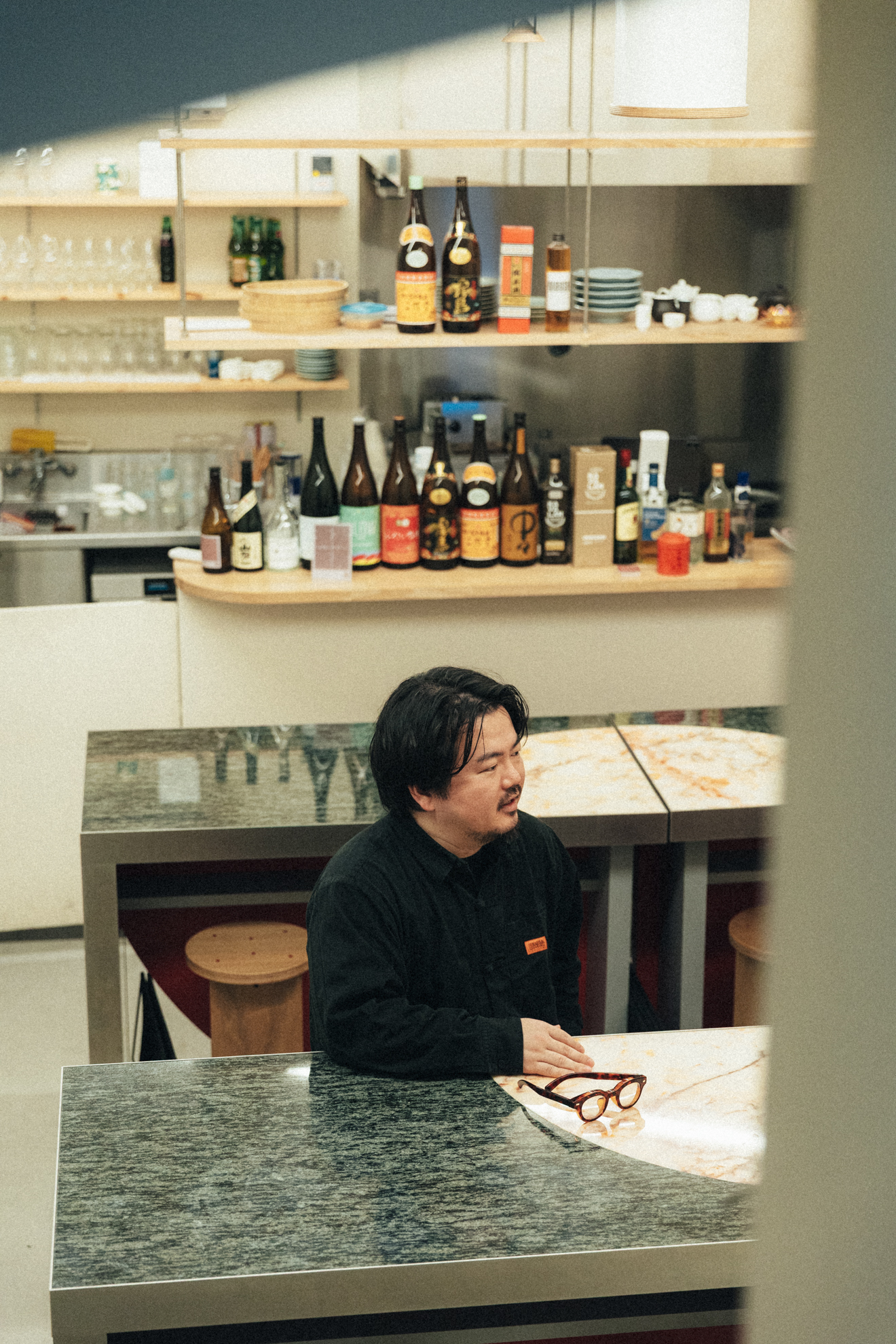
I had no choice but to bet everything on the Suidobashi shop.
●That led to opening Gyoza Sekai Tokyo in Kagurazaka?
Yes, in April 2021. It was during COVID, and I rented the space at half price. Since normal operations wouldn’t attract customers and scrutiny was high, I made it a members-only space for Instagram followers. It actually attracted quite a few people, but because the area was quiet, it drew too much attention and caused trouble for my friend. In exchange for leaving, I received subsidies, and combined with subsidies from my suspended Okayama shops, I used the funds to open a new location in Suidobashi.
●And then there was the fire?
Yes. While preparing the Suidobashi location, I received news that my first shop in Okayama had burned down. Ten buildings in the area were destroyed, and it even made national news. What should have been three shops became effectively zero. I had no choice but to bet everything on the Suidobashi shop, even sleeping in the basement during construction, and finally managed to open by the end of the year. Later, with support from a real estate company and crowdfunding, we were able to rebuild the first shop in March 2023.
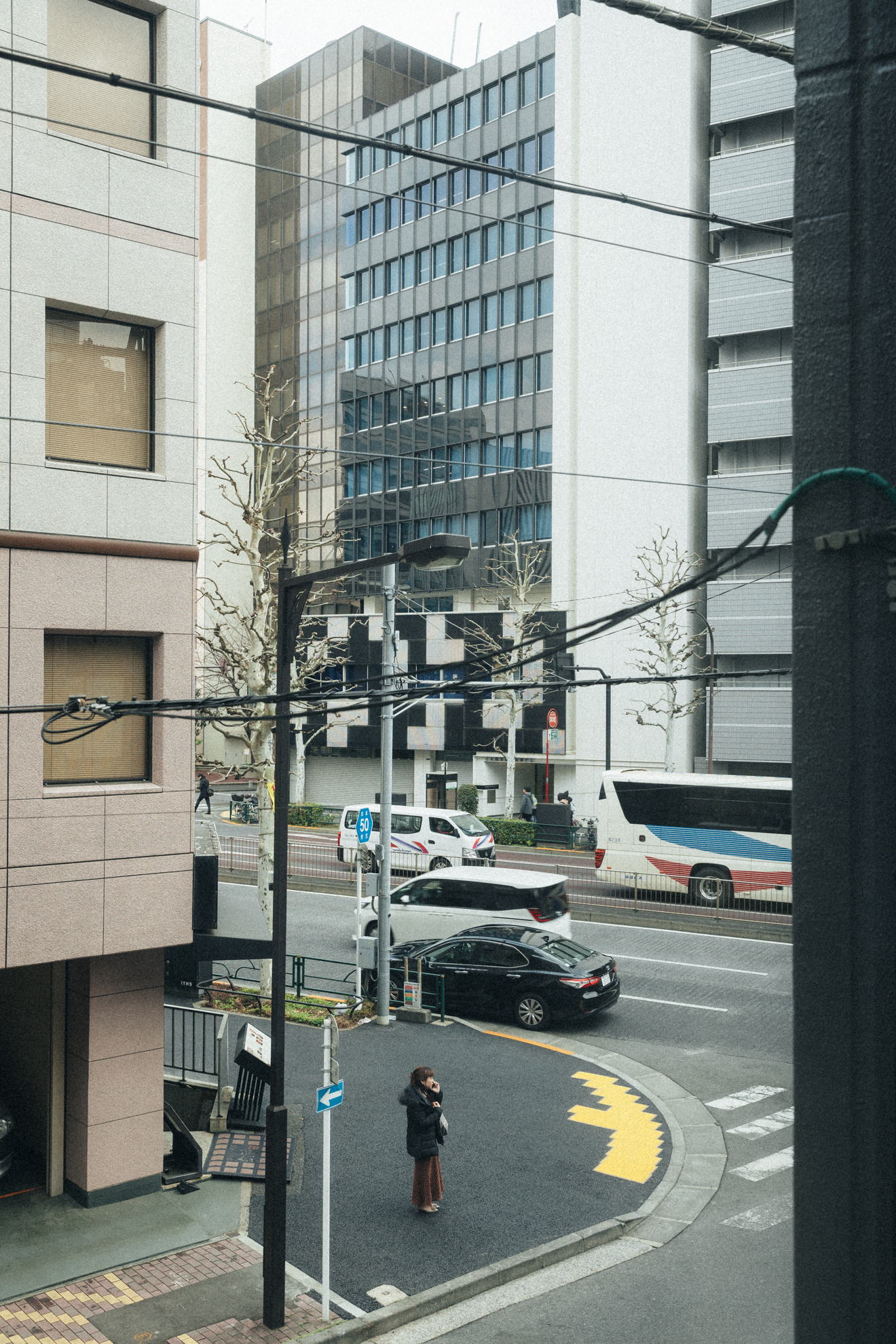
Why not try making Chinese-style dumplings?
●How were the dumplings themselves developed?
There were many reasons for choosing dumplings. They’re easy to share, come in a wide variety, and pair well with drinks. Around that time, a half-Japanese, half-Chinese friend suggested, “Japanese dumplings have become a bit monotonous, why not try making Chinese-style dumplings?” I didn’t know the recipes, but her aunt in Harbin was skilled at making dumplings. By coincidence, she came to Japan due to a family matter, and I took the opportunity to learn directly from her.
We developed a lineup including thin-skinned Japanese-style dumplings, thicker Harbin-style boiled dumplings, Beijing-style fried dumplings learned from a local Chinese restaurant owner, and shrimp dumplings in both steamed and fried versions, paired with Asian beers.
There’s a huge variety in dumplings, from home cooking to creative dishes.That’s what made them so rewarding to pursue. Even now, nine years later, we still serve those original recipes without change.
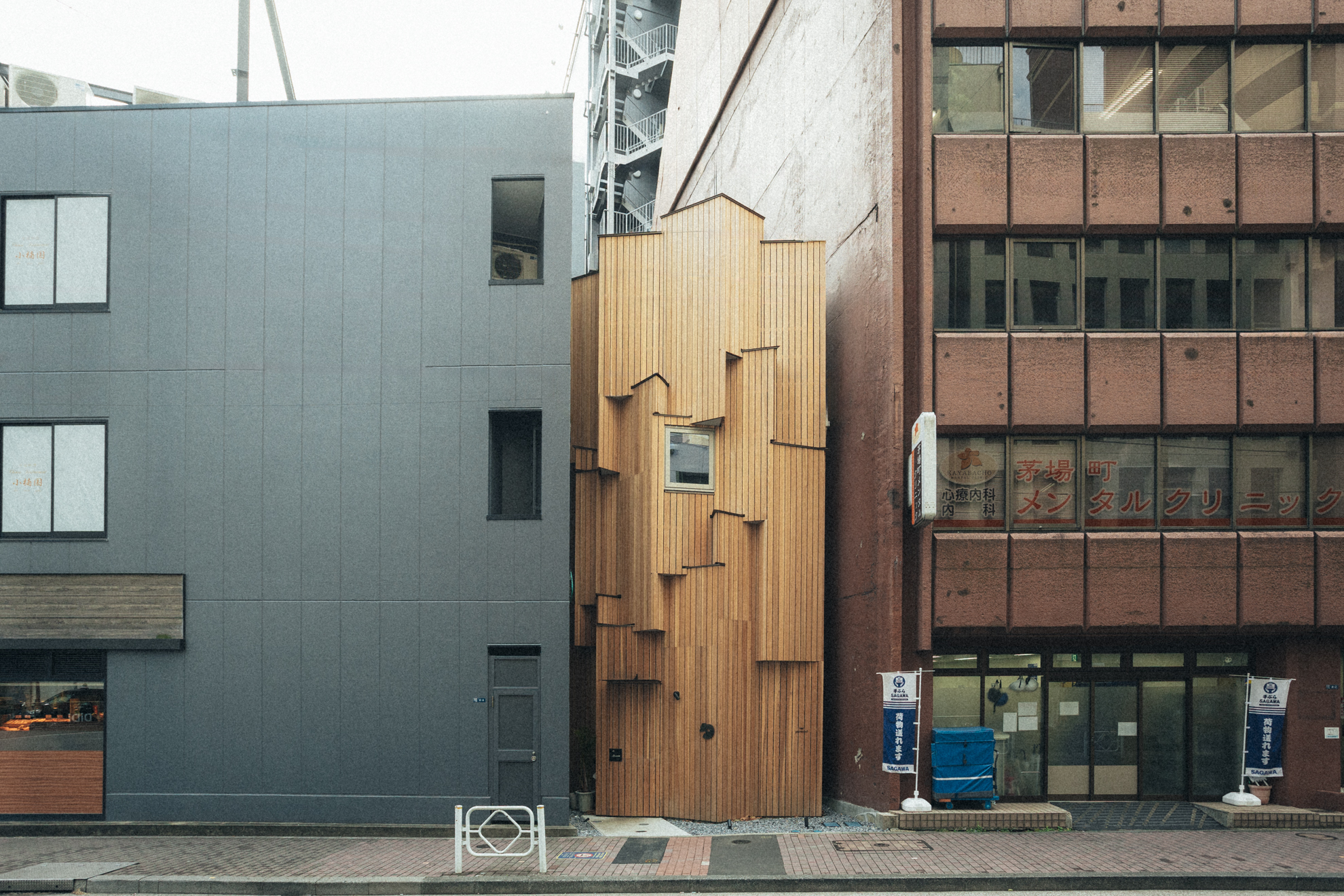
People with a strong sense of culture are flocking to this place with its interesting and sophisticated interior. When a place like that reaches out to me, I just have to say yes.
●How did Shao Shao come about?
While running Gyoza Sekai in Suidobashi, the building owner asked me to take over the adjacent space. I considered expanding Gyoza Sekai, but instead decided to try something different. Through a friend, I met a chef whose food served at their pop-ups was incredible. I persuaded him to open a restaurant, which became “Yoshoku,” a bistro-style Western restaurant. Eventually, someone from Heiwa Real Estate visited, which led to the opportunity in Kayabacho.
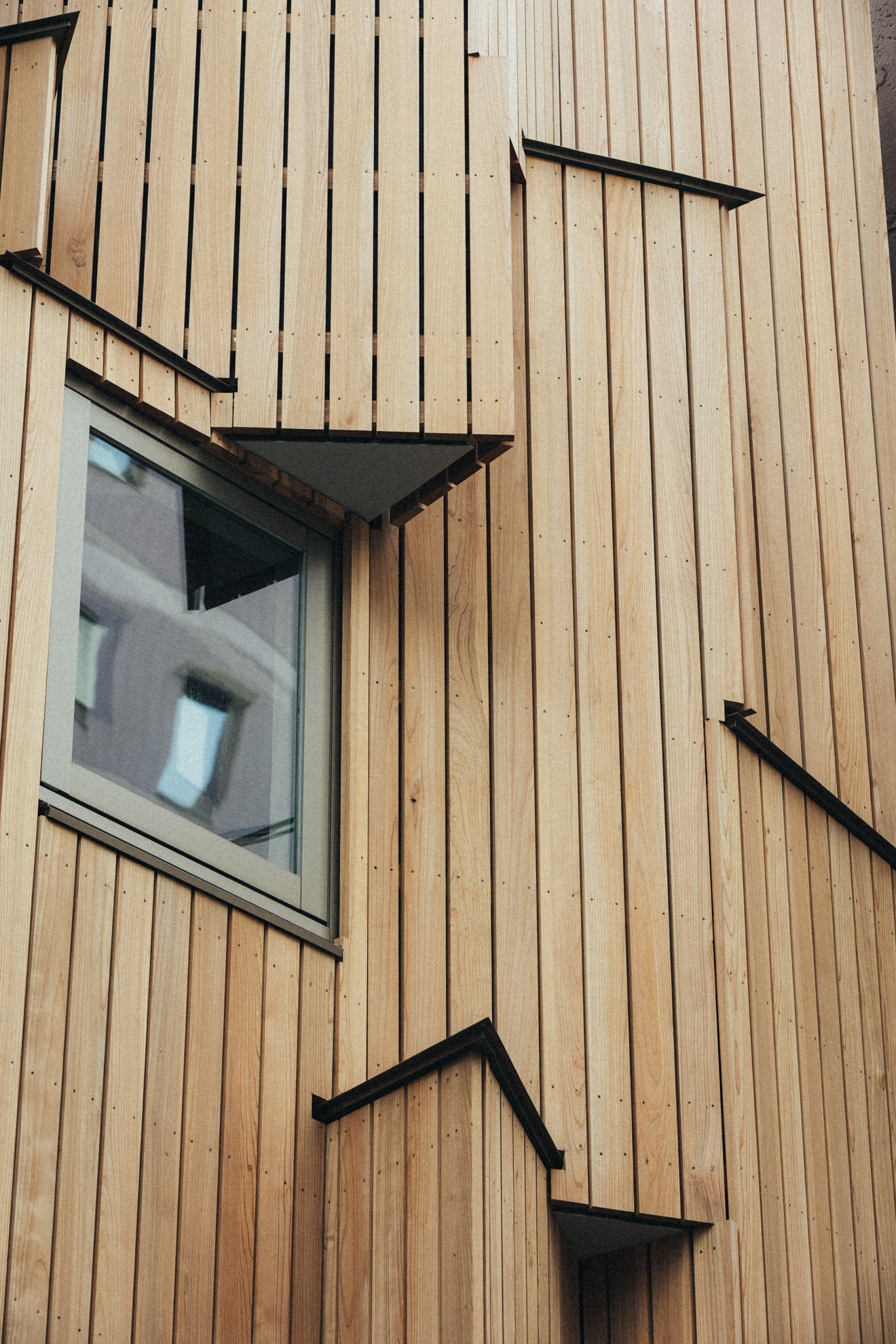
●This project actually started with the construction of “prewood,” a building designed to be disassembled, right?
When I heard we’d be building the structure from scratch, I was secretly nervous, thinking this was a much bigger project than anything I’d ever worked on before. I would keep checking the contract terms and making presentations about once every two weeks.
●What did you think of the area?
Actually, I’d been coming to Kabutocho quite a bit before to host events under the banner of Gyoza Sekai. Since the events combined gyoza and music, I was able to hold them at places like “B by the Brooklyn Brewery” and Omnipollos Tokyo. At first, I wondered if they’d even want to work with someone from out of town, but the people in Kabutocho were all so interested in me that I just had a great time. The events were a huge success, and my perception of Nihonbashi, a place I’d always wanted to get involved with if I could, completely changed. People with a strong sense of culture are flocking to this place with its interesting and sophisticated interior. When a place like that reaches out to me, I just have to say yes.
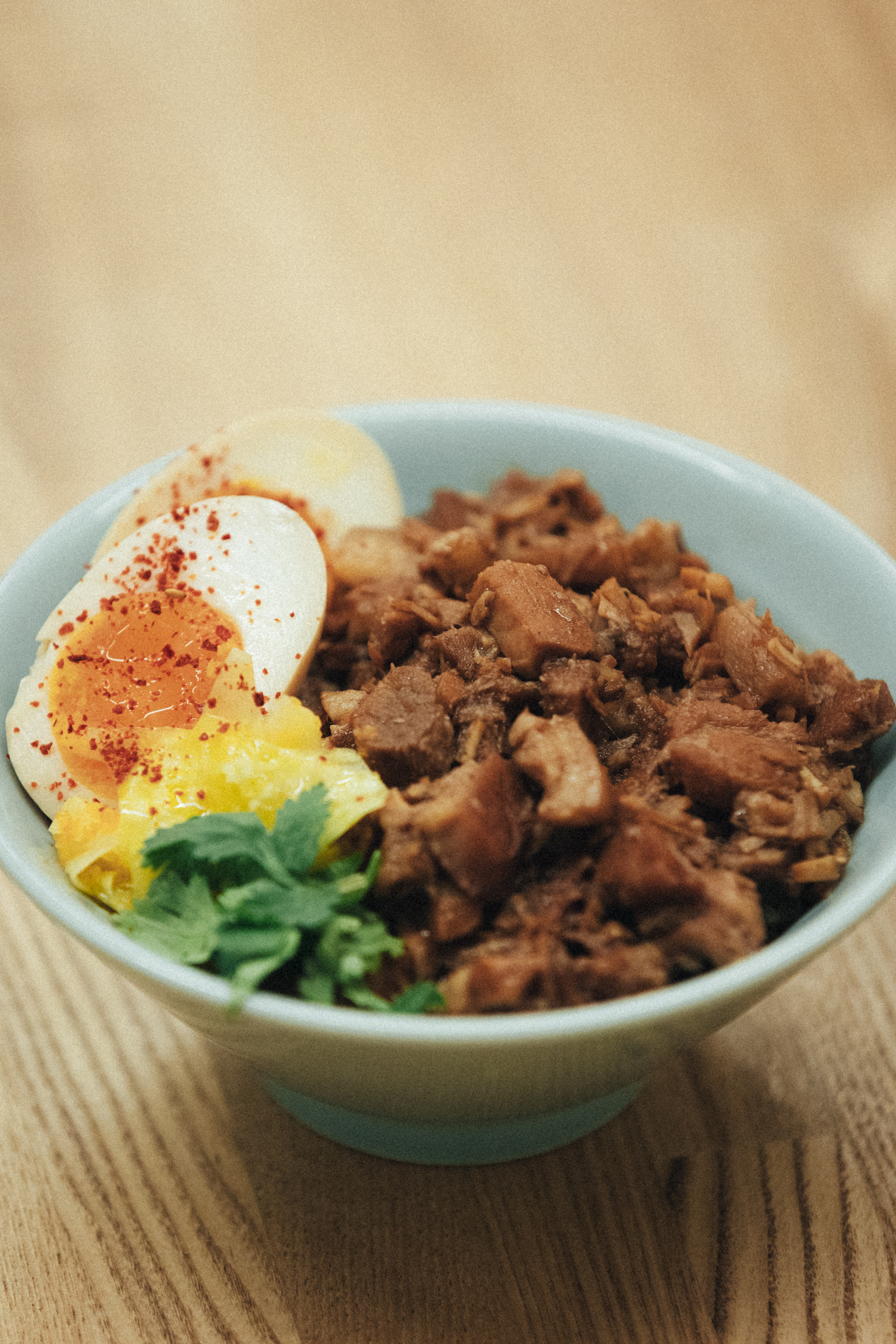
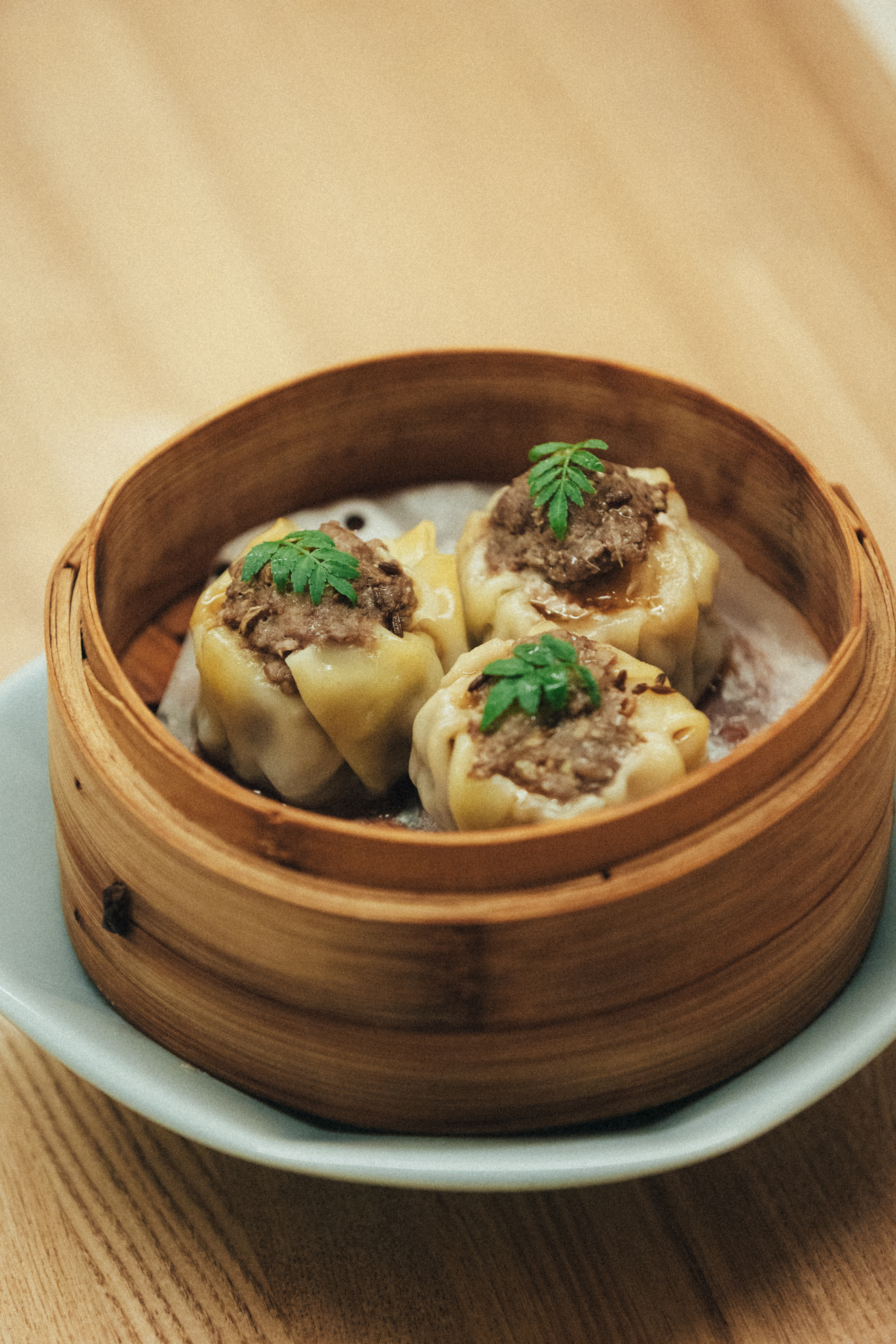
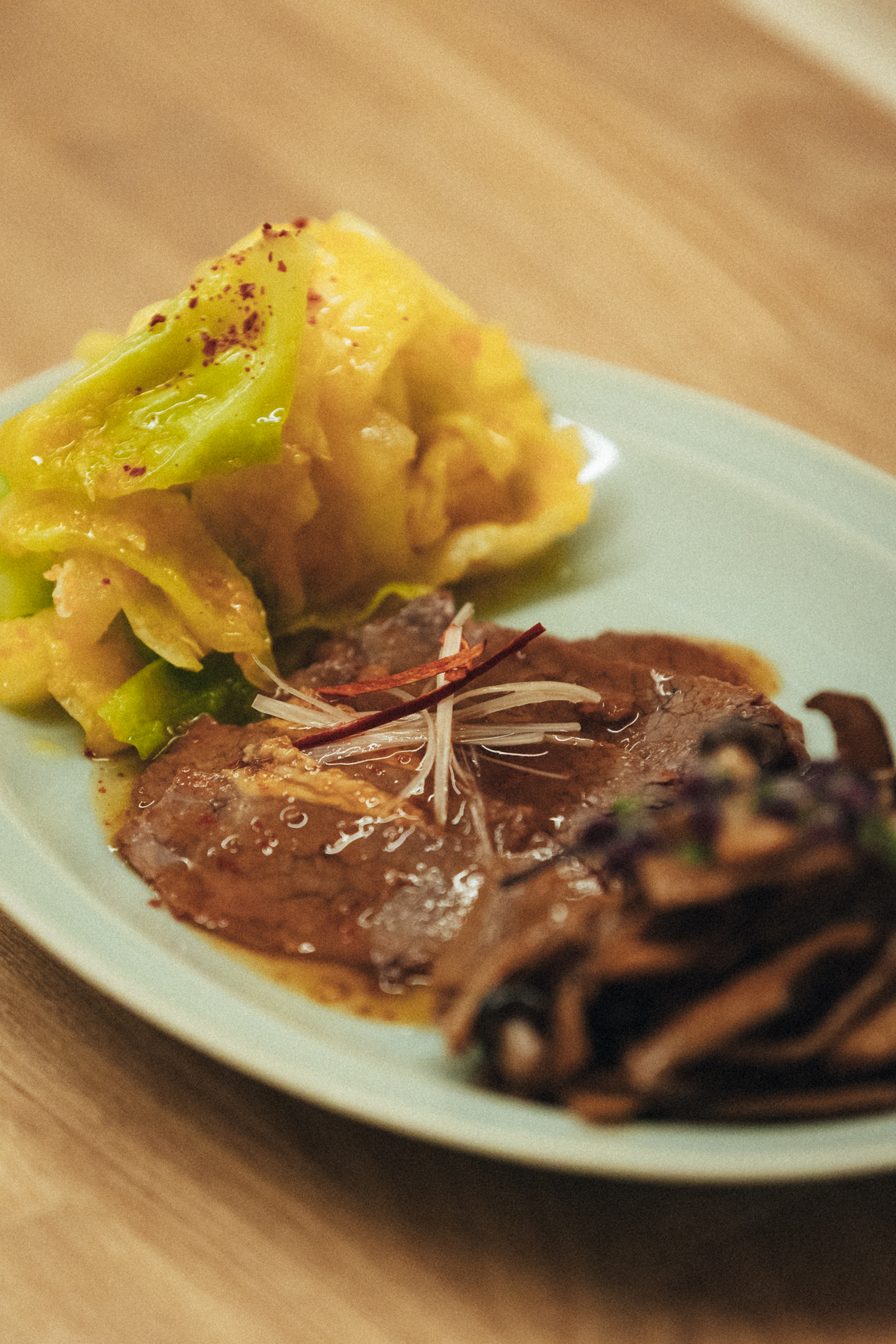
I realized there were many Chinese options but few Taiwanese ones.
●What kind of menu does Shao Shao offer?
We developed the menu together with Taiwanese chef Wu Fangyu, whom I met through pop-ups. The menu includes dishes like lu rou fan and Sichuan pepper lamb shumai, along with various small plates that pair well with drinks. She understands both Taiwanese food culture and Japanese tastes, creating dishes that resonate well here.
●Did you adjust flavors for Japanese palates?
Yes. Authentic Taiwanese cuisine can be quite sweet for Japanese palates, so we carefully balanced flavors across the menu while maintaining traditional techniques.
●Why focus specifically on Taiwanese cuisine?
When I thought about what office workers in Kabutocho might want to eat, I realized there were many Chinese options but few Taiwanese ones. I felt high-quality Taiwanese food would definitely attract people.
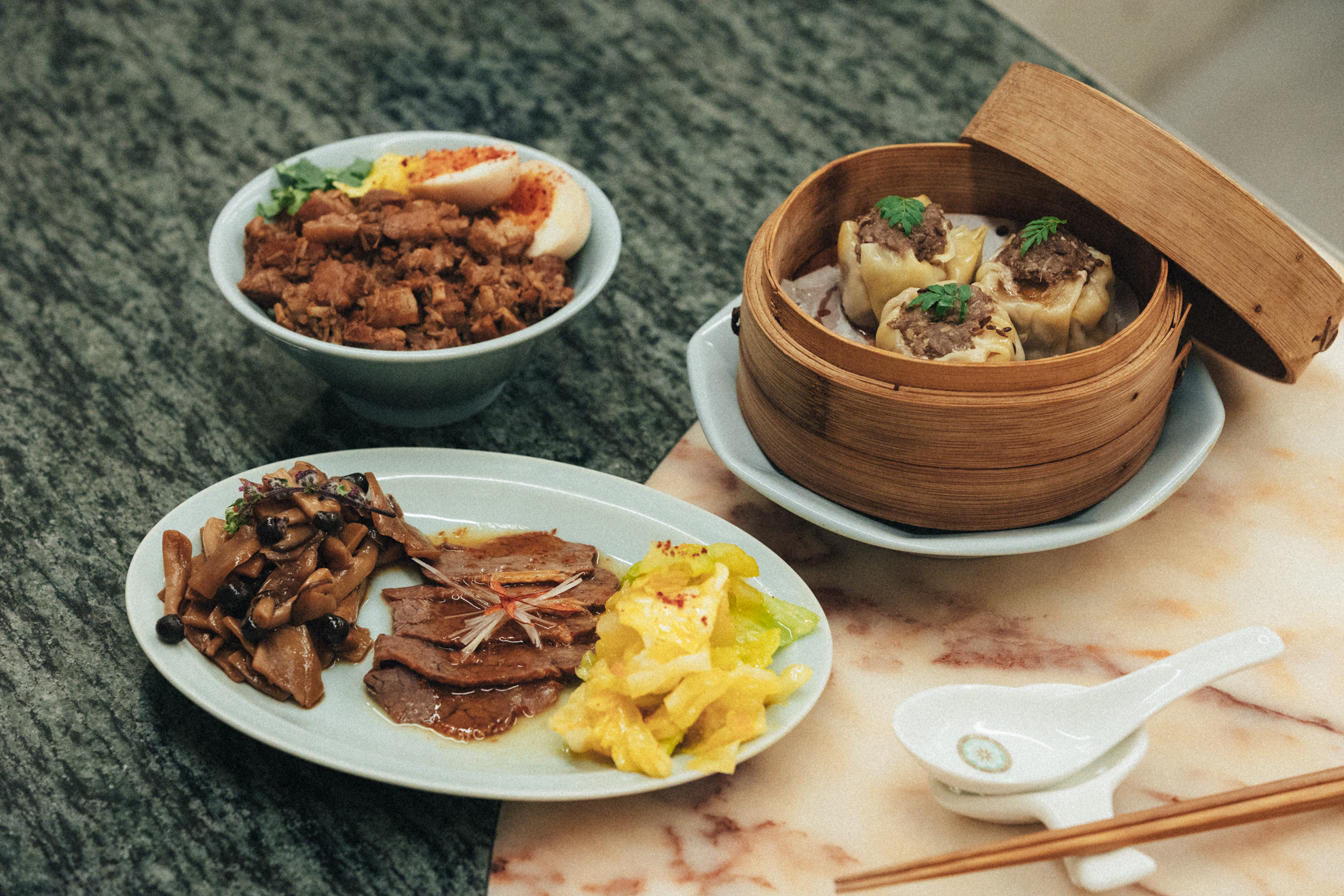
I believe we were invited here because we’re expected to connect people through food.
●What kind of place do you want Shao Shao to become?
I believe we were invited here because we’re expected to connect people through food and create opportunities for interaction. I’d like to host events, building on my experience, and we’re also investing in sound equipment. Over time, I want to shape the space into something slightly deeper and more personal, adding plants, adjusting lighting, and incorporating art.
●You’re planning events as well?
Yes, we want to collaborate with nearby venues and create events that encourage people to move around the area. The second floor can transform into a DJ booth, allowing the space to shift between dining, social gatherings, and events.
●Finally, what is the meaning behind the name “Shao Shao”?
I liked the idea of repeating the same character for its sound. The character “勺” means “ladle” or “to scoop,” and we hope to “scoop up culture” just like a spoonful of food. Also, Wu loves pandas, so “Shao Shao” felt just right!
●What kind of future do you envision for Kabutocho?
From my background in architecture, I’ve always believed in creating places that draw people in. Since COVID, the area has become quieter, so the challenge is how to create intersections between finance professionals and creatives. Those intersections can generate something new. Shao Shao aims to become a place that naturally connects those gaps, a starting point for communication within the city.

Naoki Moriya
Born in 1990 in Okayama Prefecture. After dedicating his youth to soccer in Kurashiki, he moved to Tokyo, aiming to become a professional soccer player, but later shifted to architecture and public space design at Waseda University. After joining Stripe International, he worked across marketing, advertising, and art-related projects while traveling between Tokyo and Okayama. In 2017, he founded his first restaurant and brand, Gyoza Sekai, in Okayama. After various challenges, he opened Gyoza Sekai Tokyo in Suidobashi in 2021. In 2024, he established the bistro restaurant Yoshoku, and in October 2025, opened Shao Shao in Kayabacho. He currently operates six restaurants and continues to create spaces for communication through food and music-driven events.
Interview&Text : Jun Kuramoto
Photo : Naoto Date
Naoki Moriya
Owner, Shao Shao
Kentaro
SR Coffee Roaster
Interesting people in Kabutocho
I think it’s important that there are people in Kabutocho who make you want to visit just to see them. While some are culinary professionals, others focus on designing spaces for communication. I consider myself the latter, which is why having someone like him in the neighborhood is, in itself, a reason to visit.