A Small Place to Pause Along the Way
Yellow Flowers Connecting People, Greenery, and the Rhythms of the City
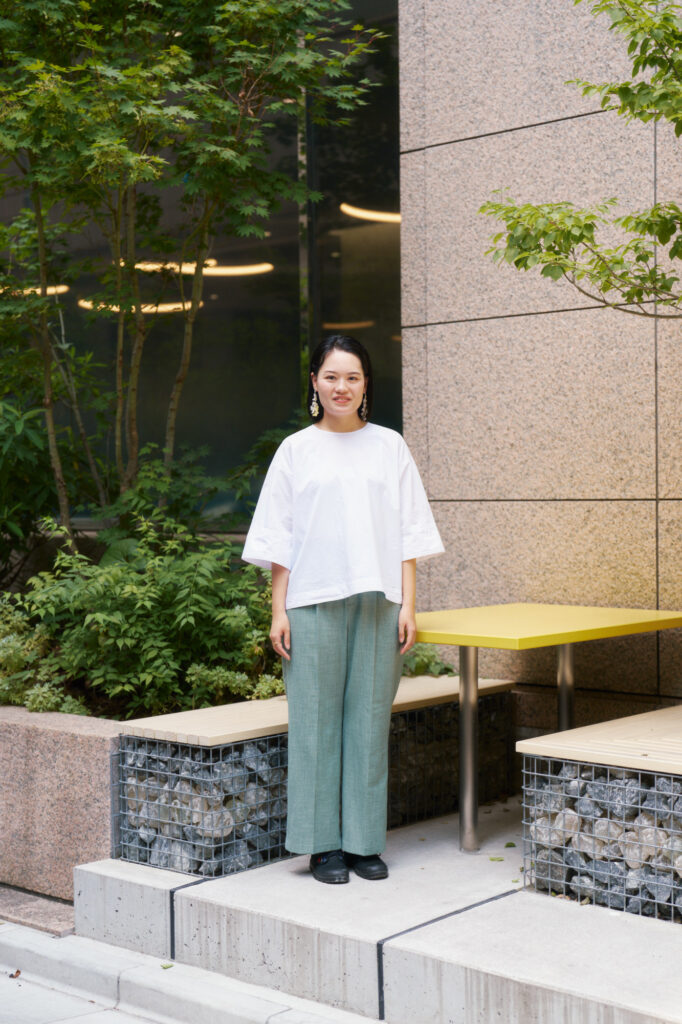
Between Heiwa Building No. 1 and Heiwa Building No. 6 in Nihonbashi Kabutocho, a new space called “kiten.” has emerged, seamlessly connecting the outdoor spaces of the two buildings and transforming what was once simply a passageway into a place where people can pause and rest. Its concept is “Stock Share Scape,” a landscape where people can gather, share, and distribute energy. The project was created by parkERs, a team that designs spaces around the relationship between plants and people. This time, we spoke with Miharu Hanada, the plants coordinator responsible for the planting on the Heiwa Building No. 1 side, about how she interprets a location and envisions a landscape where people and plants grow together.
●When did your relationship with plants begin?
As far back as I can remember, I loved plants and the outdoors. I would pick wildflowers growing on the side of the road, arrange them in empty cans, or just stare at flowers wherever we went. Even on nursery school walks, I was the only child picking grass along the way, always a step behind the group!
Eventually, the other children started bringing me things they had picked, saying, “I found one, this one too!” I grew up in Nippori, an old downtown neighborhood of Tokyo. It wasn’t somewhere particularly rich in nature, but I was fascinated by everything that grew there, even the plants pushing their way through cracks in the asphalt.
●Who taught you the names of flowers and how to enjoy the changing seasons?
My grandparents, who lived nearby. They grew all kinds of plants in front of their house and often taught me their names. They were both quintessential Edokko (true old-school Tokyoites). During cherry blossom season, they would say something like, “The cherry blossoms are blooming! We can’t possibly stay home. Let’s go!” I would ride on the back of my grandfather’s bicycle, and he often took me to places like Ueno and Sumida Park. And wherever we went, my eyes naturally turned to plants. At the seaside, instead of swimming, I would pick flowers and grasses near the beach. There are even photographs from a family trip to Switzerland where I’m picking flowers. There wasn’t one particular moment that made me love plants. By the time I noticed, they had simply always been part of my life.
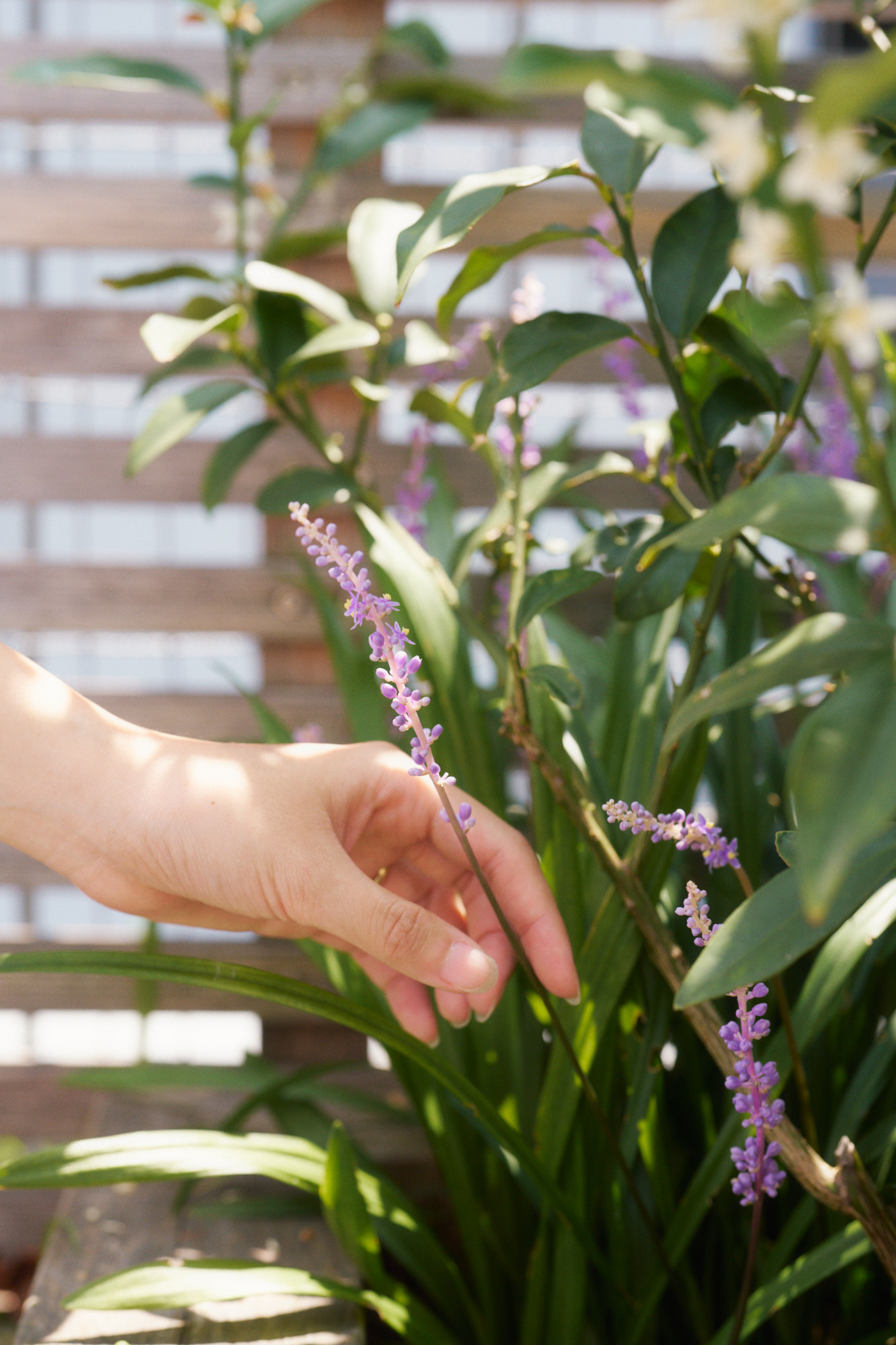
I don’t think about a color in isolation. I look at what sits beside it and how the light will fall on it. That way of seeing may well come from those hours I spent playing with glass.
●Apart from plants, was there anything else at home that fascinated you?
My mother is a stained-glass artist, so her studio was always filled with tiny pieces of glass. As a child, it was completely normal for me to play with them, holding them up to the light or combining different colors as if I were making brooches or jewelry. Whenever my mother said, “That’s a lovely combination of colors,” I was incredibly happy.
●Does that sensibility carry over into the way you work with plants today?
I think it does. Rather than bringing together plants in the same shade of green, layering different tones, leaf shapes, and ways of filtering light creates much more depth. I don’t think about a color in isolation. I look at what sits beside it and how the light will fall on it. That way of seeing may well come from those hours I spent playing with glass.
●Besides your sense of color, is there anything else you feel you inherited from your family?
My father is a sociologist who studied journalism at university. He loved researching things, and our house was full of books. Whenever I asked him a question, instead of simply giving me the answer, he would say, “There’s a book about that, too,” and point me toward all kinds of different sources.
One of the books I became absorbed in as a child was an illustrated book about plants that he bought for me. If there’s something you don’t know, start by looking through the available materials. I think that habit came from my father.
Even now, when I research a place for work, I visit the local library and look for municipal documents and locally published books, the kinds of materials you can only encounter in that particular place.
●When did you decide that you wanted to study plants?
By the time I was in high school, I knew I wanted a career that involved plants in some way. But there are many possible paths: a florist, a landscaping company, a gardener. Rather than deciding on a single profession from the outset, I wanted to study broadly first and find my direction along the way. So I entered the Department of Landscape Architecture Science at Tokyo University of Agriculture.
●What did you study there?
An incredibly wide range of things. We had practical classes where we designed and planted our own flower beds, as well as drafting, pruning, cutting undergrowth, and building hedges. We also collected leaves one by one and made hundreds of reports recording everything from their texture to the serrations along their edges. In winter, we even had exams where we had to identify tree species just by looking at their bare branches. Until then, I had simply picked whatever plants caught my eye. At university, I gained the techniques and vocabulary to really observe them. I also learned how planting can completely transform a place. At Tokyo Disney Resort, for example, different areas use different plants and pruning styles. In futuristic areas, trees are shaped into geometric forms. Along the outer perimeter near the sea, plants are chosen for their resistance to salty coastal winds. What stayed with me was how plants were selected from both perspectives: how they should look and how they would respond to the environment.
●I understand that at university you also studied landscapes and the character of different places.
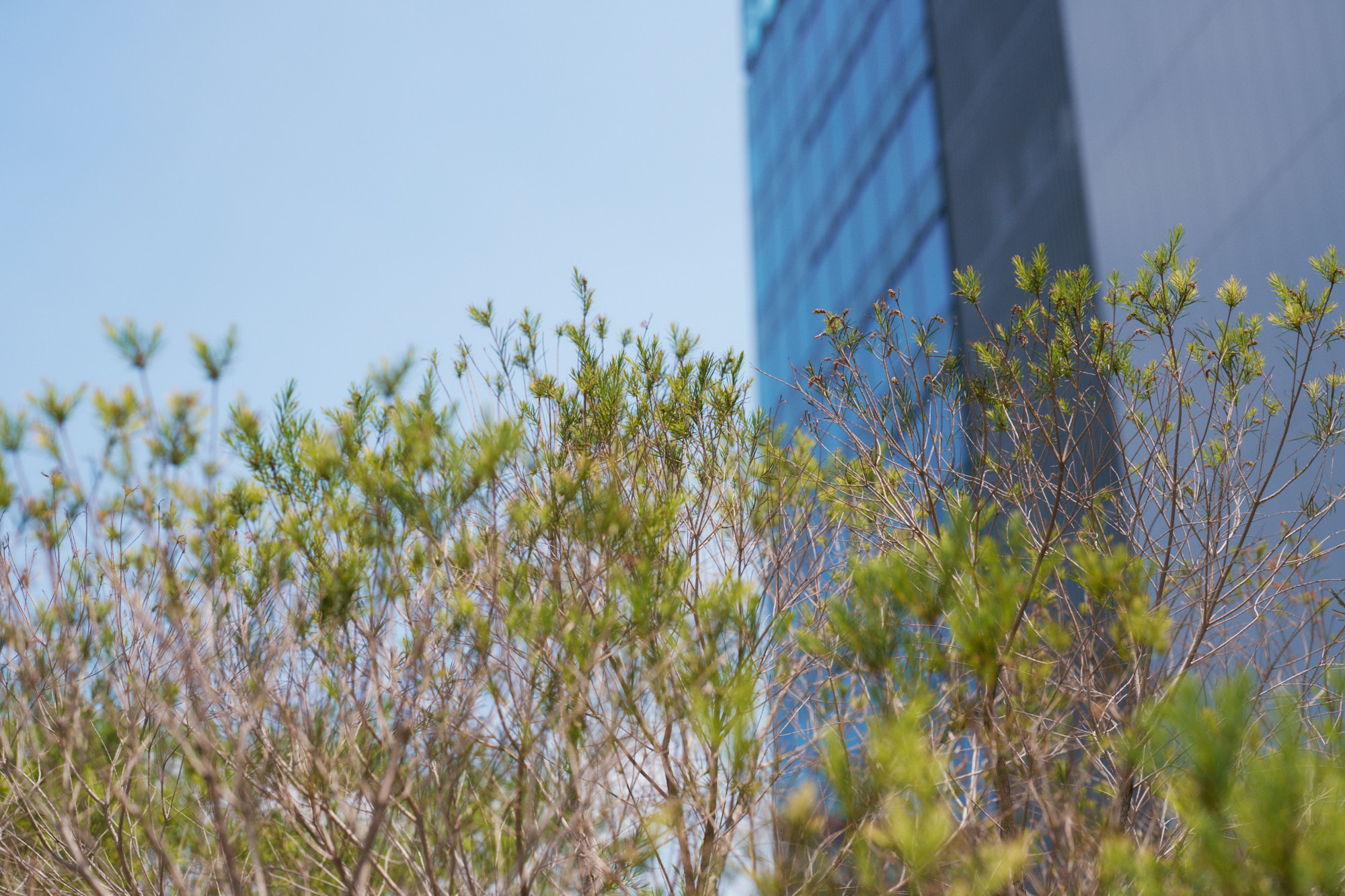
Yes. In the landscape research lab, we were taught not to use phrases like “the character of a place” simply as a matter of intuition, but to explain what makes a place distinctive through research and analysis. In Kurashiki, which became the subject of my research, we documented every possible element that shaped the landscape: the latticework on windows, walls, building heights, plants, colors, even the typefaces used on signs. From there, we traced those elements back through the area’s history and the lives of the people who had lived there, asking why the town had come to look the way it does today. Even now, when I research a place for work, I visit the local library and look for municipal documents and locally published books, the kinds of materials you can only encounter in that particular place. The habit my father taught me, of starting with the source material, still informs the way I read a place today.

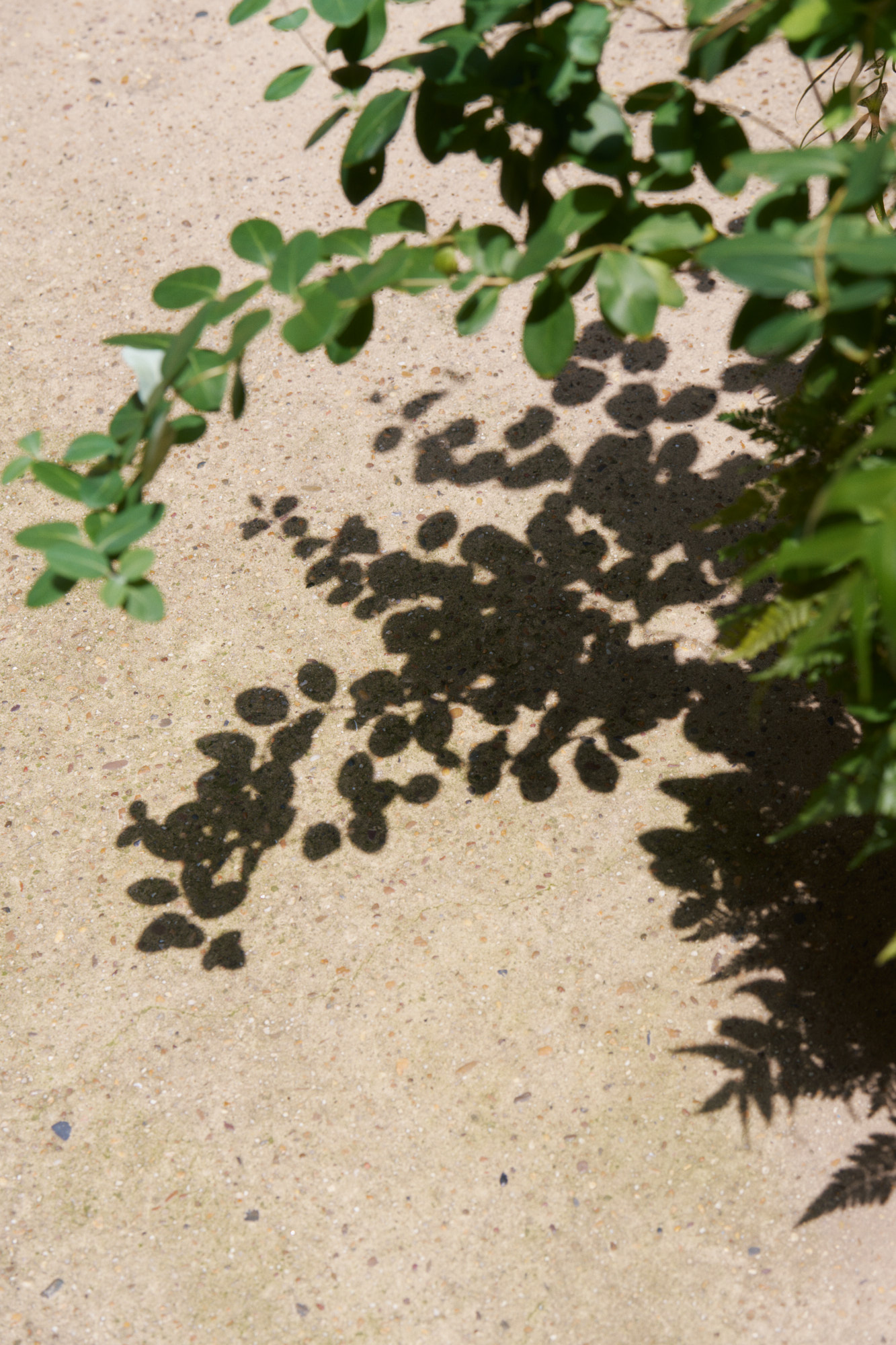
When greenery enters a space that was previously empty, both the way it looks and the way it feels can change all at once.
●How did you begin working professionally with plants after graduating?
In my third year at university, I wanted to experience working at a flower shop, something I had admired since childhood, so I started working part-time at Aoyama Flower Market. I learned a great deal there, including color combinations. At the same time, I realized that I was even more drawn to plants that put down roots and continue growing in a particular place. Around then, I learned about parkERs, a new team within park corporation, the company that operates Aoyama Flower Market. parkERs was designing spaces that made use of living plants, and I thought, “I want to create spaces through the relationship between people and plants.” So I asked to transfer there. After graduating, I continued gaining experience as an assistant and in plant maintenance, and I have been working as a plants coordinator since 2019. When greenery enters a space that was previously empty, both the way it looks and the way it feels can change all at once. As I watched the reactions of the people spending time there up close, my feeling of “This is interesting” gradually became “I want to do this myself.”
●When choosing plants for a space, what matters most to you?
The starting point is always how people will spend their time there. For example, if I want someone sitting down to feel as though they are beneath the shade of a tree in a park, I might choose a tree whose branches reach outward and overhead rather than one that grows perfectly straight. Where will their gaze travel? How close will they be to the person beside them? I decide the shape and height of the trees while imagining people actually inhabiting the space.
●And people can experience the same place in very different ways.
Exactly! With the same tree, one person may enjoy the dappled sunlight filtering through its leaves, while another may notice the beauty of the branches and foliage themselves. Someone might notice that a flower has bloomed, while someone else may simply feel at ease without even knowing its name. I try not to determine too precisely how people should use or experience a space. I want to leave room for different interpretations.
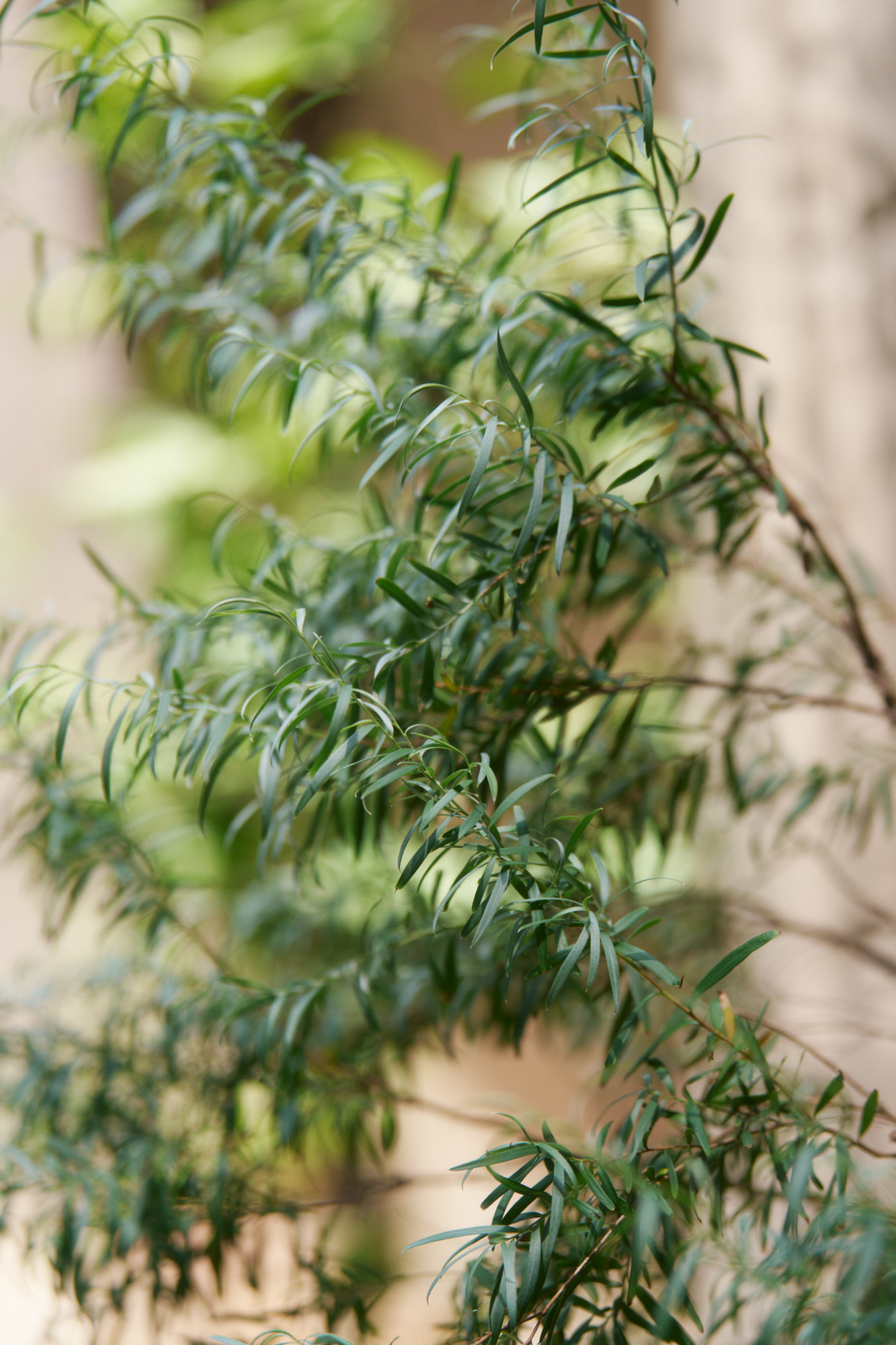
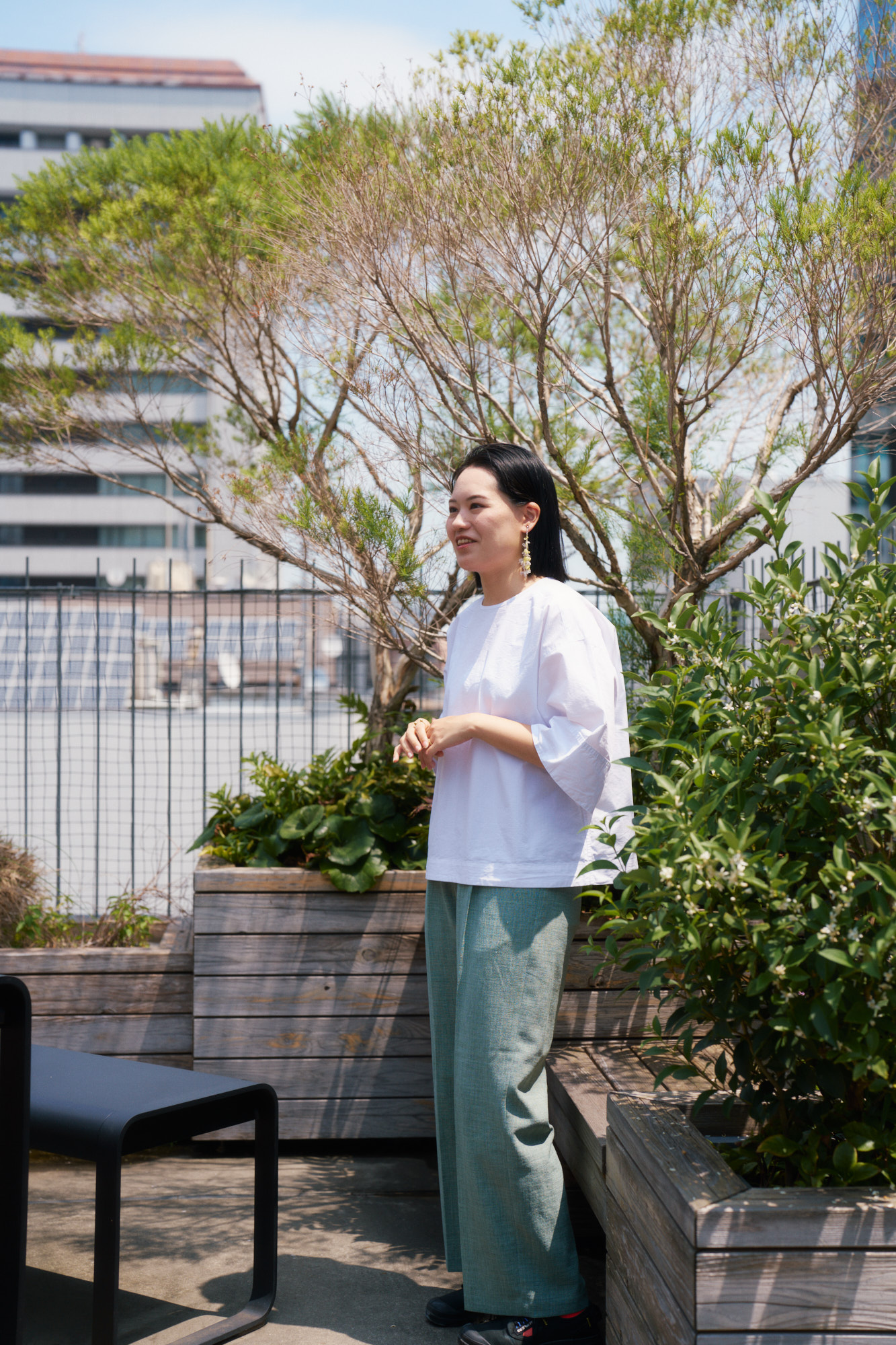
I’m interested not only in looking at plants, but in experiencing the entire process myself: growing them, harvesting them, and putting them to use in everyday life.
●Has the way you relate to plants changed through your work?
Fundamentally, the way I feel about plants hasn’t changed. Even now, if I find a beautiful fallen leaf or an acorn on my way home from work, I can’t help picking it up! At home, I have a wooden compartment frame where I arrange the nuts and seeds I’ve collected almost like specimens. But the range of things I notice about plants has broadened. I used to focus mostly on their shape and color. Now I find myself wondering how a plant has been used, as medicine, dye, or timber, and how it has accompanied people in their everyday lives. It feels as though my interest has shifted from the outward appearance of plants to what lies within them.
●I imagine you live surrounded by plants at home as well?
I do! There’s a large schefflera in my living room. I received a company award that came with a prize allowing me to buy something of my choice, and I said, “In that case, I’ll buy a tree.” I went to the greenhouse of one of our partner companies, chose a large tree myself, and had it delivered to my home. I also grow hydrangeas and other plants in my small garden. My current favorite is Japanese cotton, or wamen. Once a month, I visit a field in Sakura, Chiba, as part of a year-long program in which we grow cotton, spin the harvested fibers into thread, and eventually weave it into cloth. At the moment, I’m also growing cotton in my garden from seeds I received at the field. I’m interested not only in looking at plants, but in experiencing the entire process myself: growing them, harvesting them, and putting them to use in everyday life.
We wanted to turn it into somewhere that people who work here, live here, or simply visit the neighborhood could stop for a moment and spend time however they wished.
●How did this way of looking at plants come to inform your work in Kabutocho?
The first projects I worked on in Kabutocho were Kable and KITOKI.
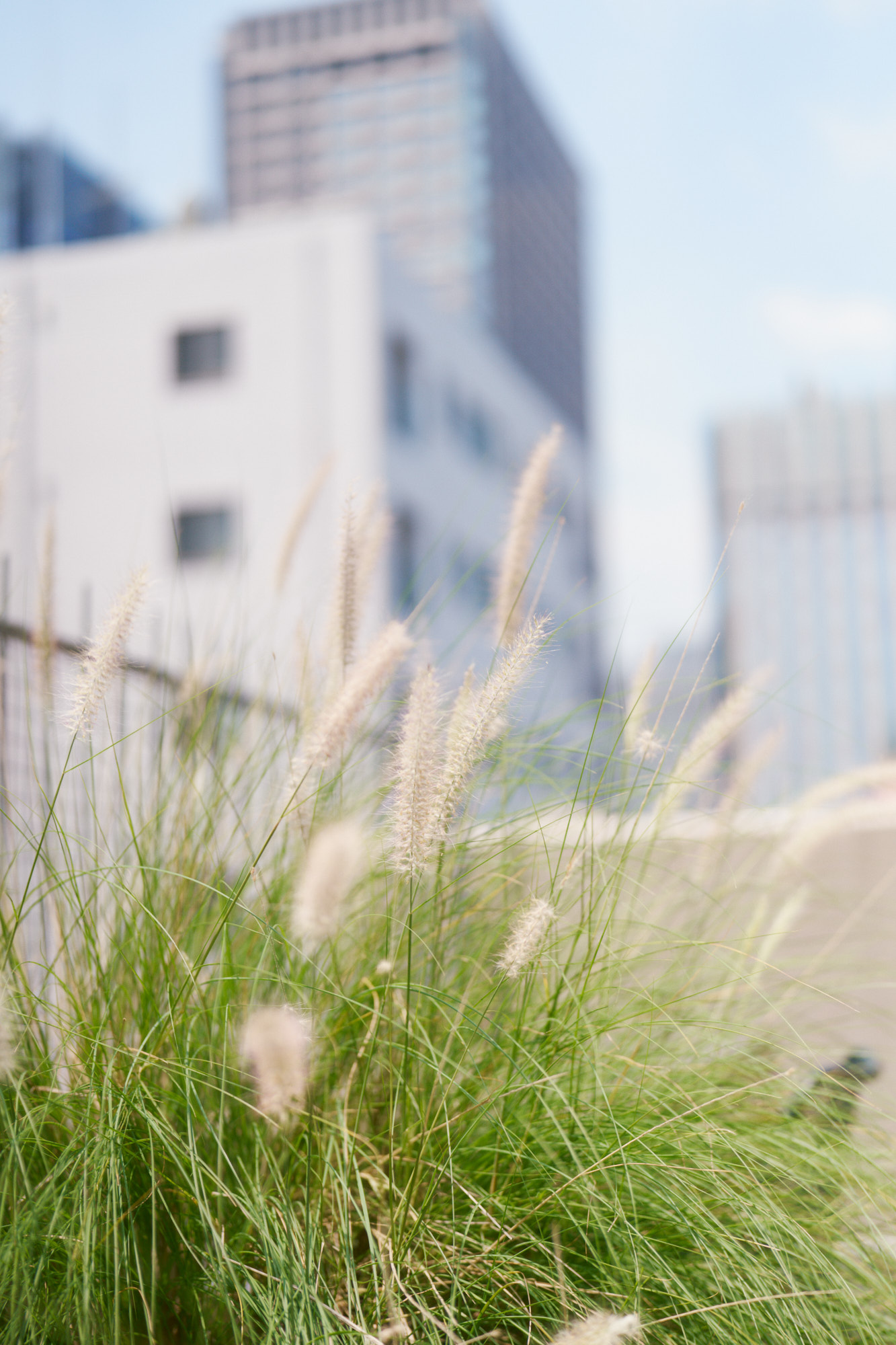
At Kable, a book lounge, we placed greenery slightly below eye level between the sofas. Rather than completely separating people from one another, the plants gently soften the lines of sight between them. We also incorporated the sound of water as an element of the space, thinking about how people could settle into reading, eating, or working while surrounded by greenery. The rooftop at KITOKI is a place where people working there can stretch out and take a break or eat their lunch. Because rooftops are exposed to strong winds, we selected linear plants that sway in the breeze, as well as plants with larger leaves that are less likely to scatter. The conditions may be different, but the underlying question is always the same: How will people spend time there, and how will the plants grow and change over time?
●After your experiences with those two spaces, what kind of landscape did you envision for kiten.?
Originally, it was a long, narrow planting bed filled with ivy, essentially a place people would pass by. We wanted to turn it into somewhere that people who work here, live here, or simply visit the neighborhood could stop for a moment and spend time however they wished. It isn’t a park, exactly, but we wanted it to feel a little like one. Because the outdoor space is long and narrow, giving people more room means reducing the space for plants, while adding more greenery means leaving less room to sit. To make both possible within the limited width, we didn’t think of the furniture and planting separately. Together with the parkERs spatial designer who worked on kiten., we planned it from the beginning as a landscape with people in it. It is a place that only becomes complete when someone sits down beside the plants.
●The name “kiten.” itself seems to reflect the kind of landscape you wanted to create.
Yes. In Japanese, the word kiten can evoke several different kinds of “points”: 起点, a starting point; 輝点, a point of light; 気点, a point where you sense the air; 樹点, a point of trees; and 黄点, a point of yellow. The name expresses our hope that these different “points” will intersect here and create new connections. The benches made from cedar from the “Tokyo Stock Exchange Forest” and the neighborhood map are also intended to encourage people to use this place as a starting point and extend their activities out into Kabutocho.
●What was particularly important to you in composing the landscape of kiten.?
A sense of ‘Kabutocho-ness’—what makes Kabutocho distinctly Kabutocho. There is its history as a financial district, but also the atmosphere of a neighborhood that is now changing as it welcomes new people and new forms of culture. We wanted the landscape to embody both. As we explored that history, we chose yellow as the main color. We felt it could connect the time Kabutocho has accumulated over the years with a sense of anticipation for the changes still to come. The yellow-flowering yamabuki, or Japanese kerria, is associated with “good fortune with money” and “refinement” in the Japanese language of flowers, while the kumquat, which bears abundant fruit, is associated with “treasure.” We also chose plants so that yellow could be found throughout the seasons: sanshuyu, or Japanese cornel, in spring; kohauchiwa-kaede maples turning yellow in autumn; and robai, or wintersweet, in winter—through flowers, fruits, and leaves.
I think part of what makes kiten. distinctive is that even though you return to the same place, it may look different from the last time you were there.
●The yellow benches and tables are striking as well.
Yes. Yellow appears not only in the planting but also in the benches, tables, and signage.
Together with the soft greens of the plants, it stands out beautifully against a streetscape with a lot of gray. I hope that someone might spot the yellow from a distance and think, “What’s that over there?” and feel drawn to come closer.
●How is the “Stock Share Scape” concept expressed in the landscape of kiten.?
The concept plays on Kabutocho’s identity as a district associated with stocks and finance, while expressing the idea of a place where people can stock up on energy, share it, and pass it on to others.
You might spend some time beside the plants and leave feeling just a little more replenished than usual. Or you might notice that a flower has bloomed and tell someone about it, then come back together next time.
We wanted to think beyond the experience of simply being there, to imagine how that experience might extend into conversation and inspire whatever comes next.
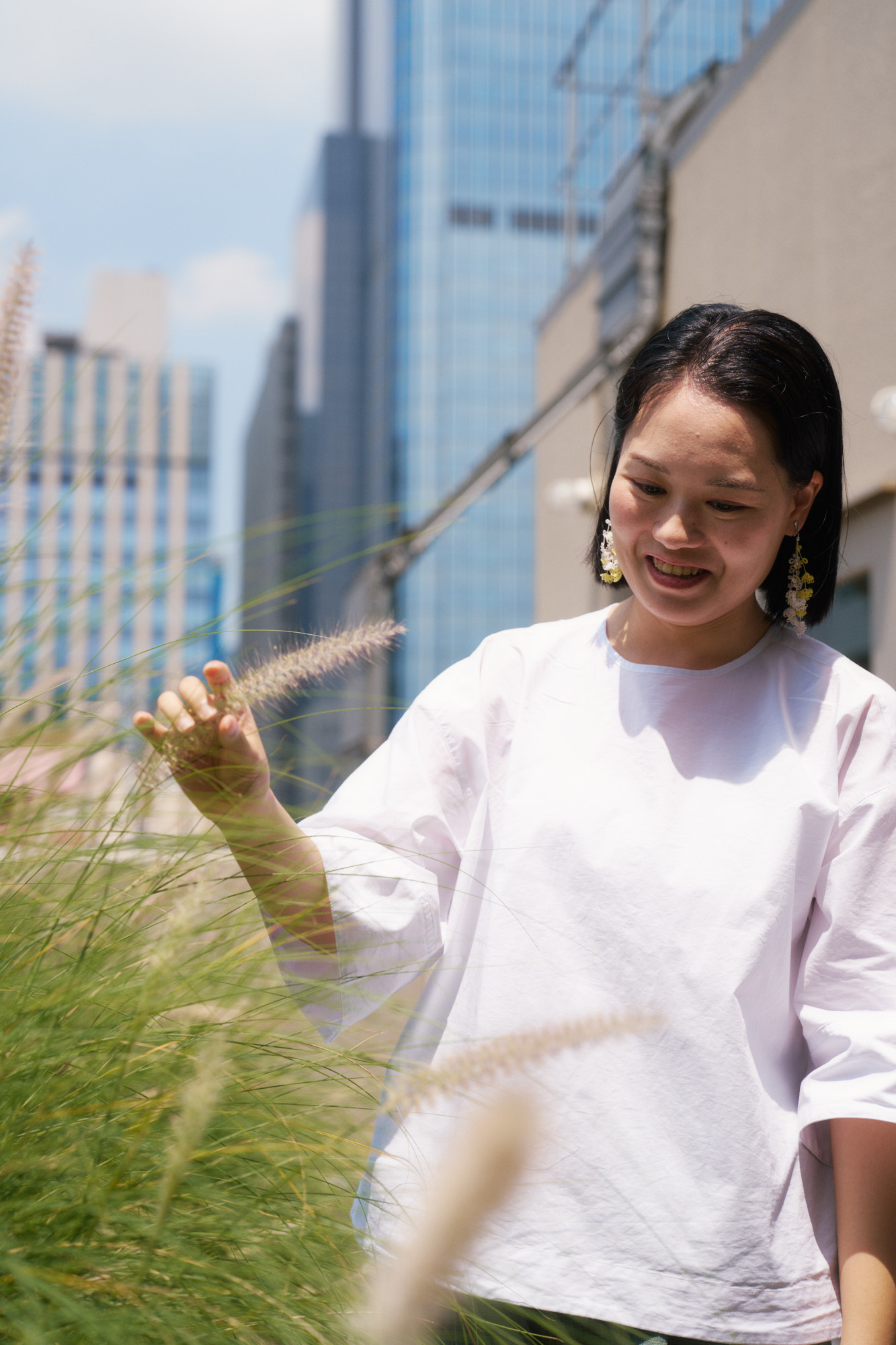
●Does the freedom to choose how you spend your time there also contribute to that landscape?
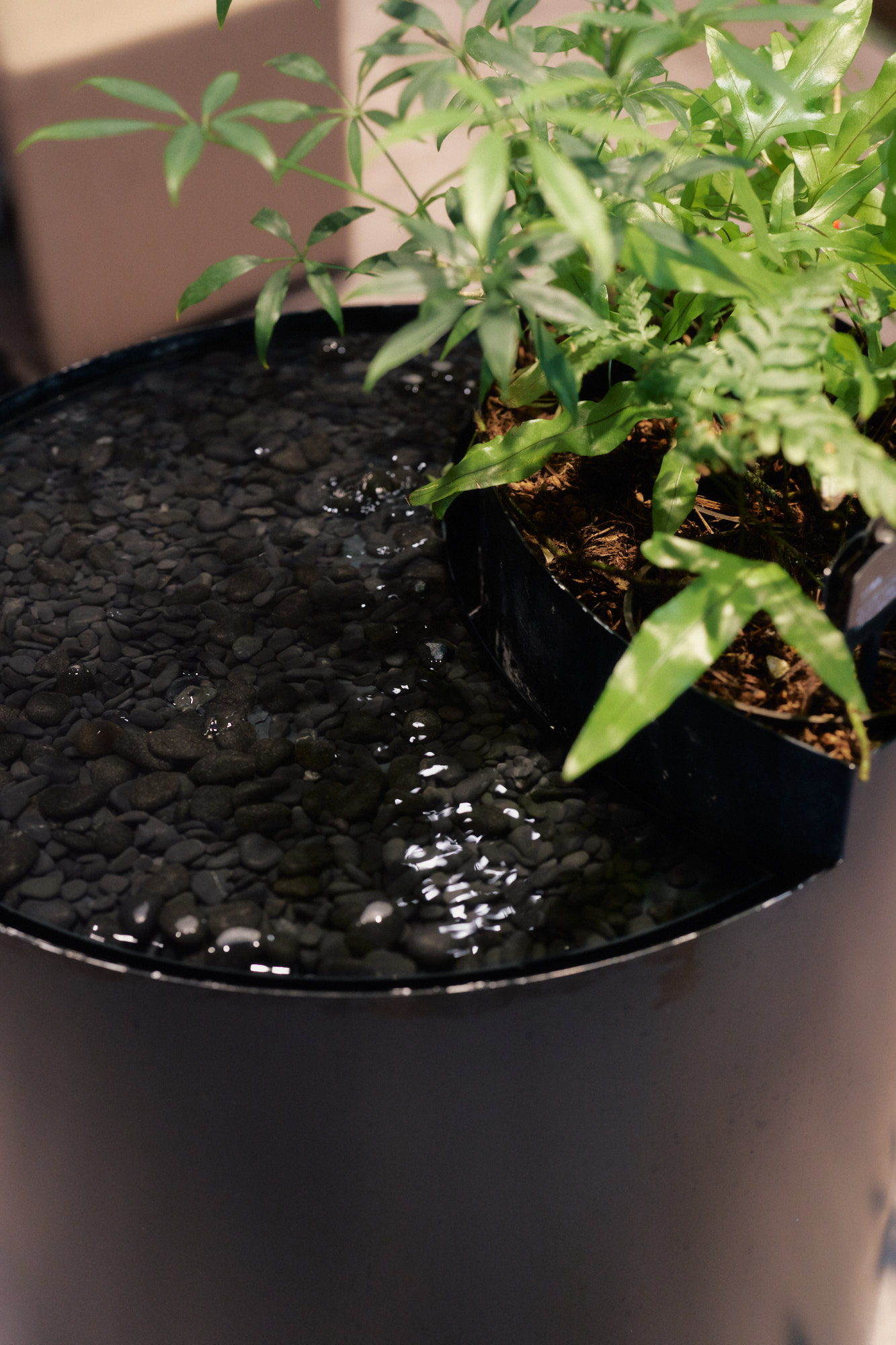
Yes. There are benches with sliding seats and side tables, a high counter, and box seats beneath the trees. Whether you are alone or with someone else, you can choose how you want to spend that particular day. If someone moves a seat, the landscape is slightly different for the next person who arrives. The plants, too, send out new shoots, bloom, and shed their leaves. The way people use the space overlaps with the changes in the plants. I think part of what makes kiten. distinctive is that even though you return to the same place, it may look different from the last time you were there.
●Now that people have started using the space, have there been any scenes that particularly stayed with you?
It’s interesting because every time I visit, people are using it differently.
On weekdays, office workers come at different times to eat lunch. On weekends, you might see younger people sitting and talking. Once, I saw a row of children sitting side by side along the long bench, and it was even more charming than I had imagined! The fact that the people in the neighborhood change so much between weekdays and weekends may itself be something distinctly Kabutocho that only became visible once people actually began using the space. Of course, I’d be happy if people learned about the intentions behind the design or the stories of the plants, but I don’t want to impose those explanations on them. First and foremost, I want each person to simply enjoy being there in their own way. From there, perhaps they notice a flower or a tree, a conversation with someone begins, and little by little they develop an affection for the place. That would make me happiest. Sometimes, people I meet through other projects will say to me, “I spent some time at kiten. the other day.” When kiten. comes up in conversation even when I’m not there, I feel those little points beginning to spread outward.
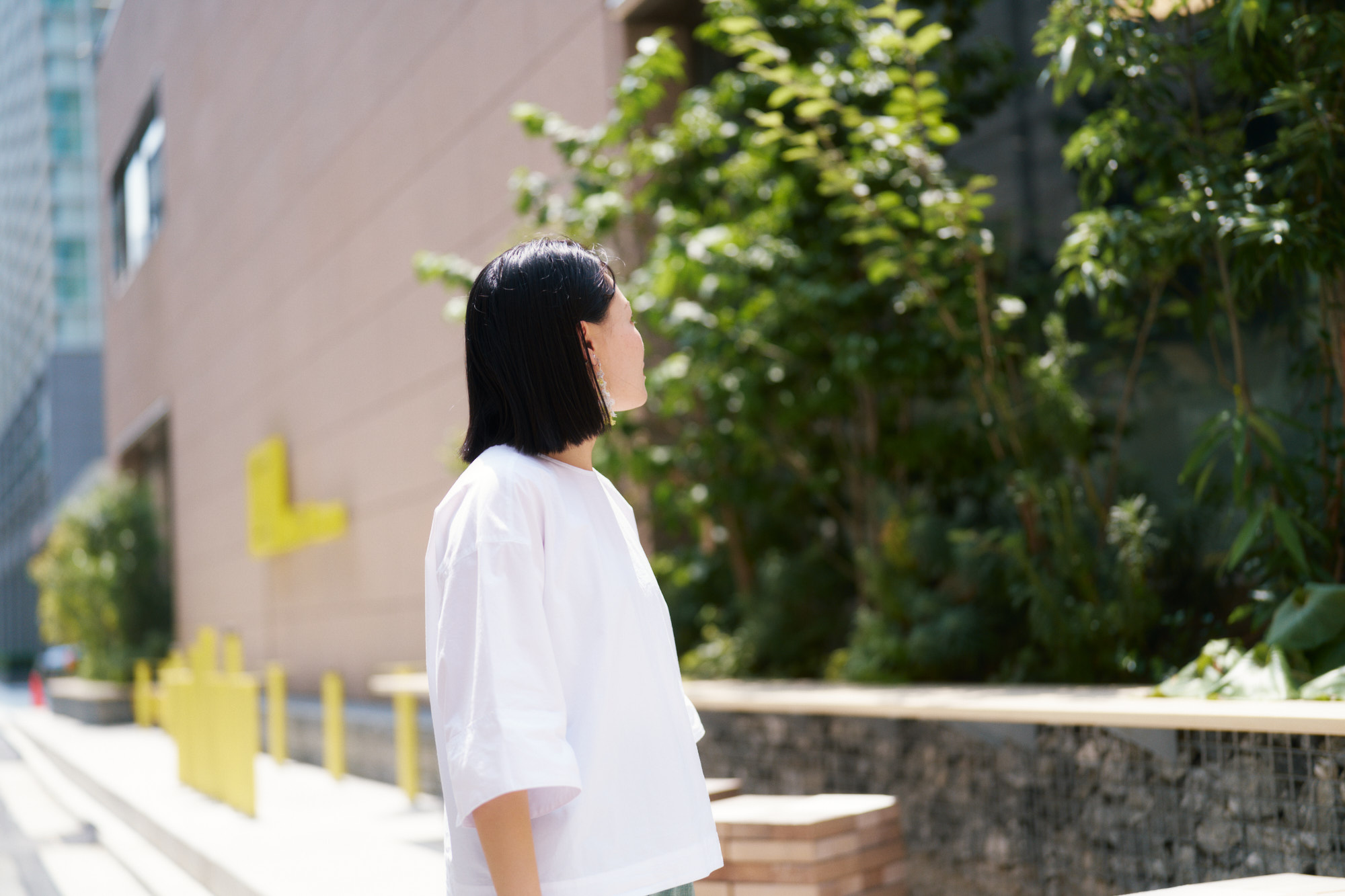
I think a place that is loved by its community is a place that continues to be used. I hope the landscape here continues to ripple outward, and that the scenery of Kabutocho continues to evolve along with it.
●As those “points” continue to spread, what would you like kiten. to become a few years from now?
I’d love to see the plants grow, the place become familiar to more people, and eventually have people use it as a meeting spot. I hope it becomes an icon of the neighborhood, somewhere you can simply say, “You know, the place with the yellow flowers,” or “That place with all the plants,” and people immediately know where you mean. I think a place that is loved by its community is a place that continues to be used. I hope the landscape here continues to ripple outward, and that the scenery of Kabutocho continues to evolve along with it.
●Finally, what kind of spaces would you like to explore creating in the future?
I want to create spaces where not only people, but plants too, can properly put down roots. Even without an enormous site, beneath the surface of the soil there are unseen pathways for water and air, and microorganisms are living there. I want to begin by creating the right environment, rather than simply placing plants in a space, so that they can grow healthily over many years.
And I’d like to create comfortable landscapes surrounded by trees, flowers, and grasses that can also be useful in everyday life. As I deepen my own experience of growing plants and making things from them, I hope to translate the relationship between plants and everyday life into the spaces I propose.
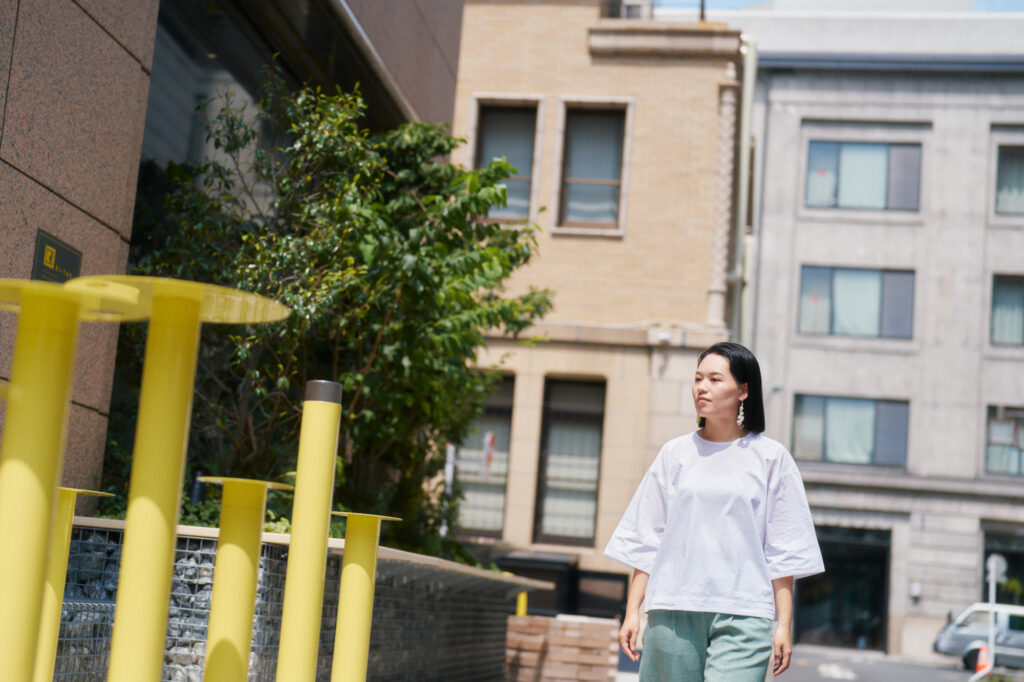
Miharu Hanada
Plants Coordinator, parkERs. Born and raised in Nippori, Tokyo. Graduated from the Department of Landscape Architecture Science, Faculty of Regional Environment Science, Tokyo University of Agriculture. She joined parkERs as an assistant in 2014 and has been working in her current role since 2019. Her work creates spaces that connect the history and culture of a place, the ways people spend their time there, and the plants that inhabit it. In Nihonbashi Kabutocho, she has worked on the planting for Kable, KITOKI, and kiten., helping shape and communicate an urban landscape where greenery and people come together.
Miharu Hanada
Plants Coordinator, parkERs
Satsuki Morita
Representative Director, YOEN Co., Ltd. / General Producer, OTAKI HERB GARDEN
Interesting people in Kabutocho
When I visited the OTAKI HERB GARDEN recently, Ms. Morita gave me such a wonderful tour of the grounds. What fascinated me was the way they present plants not simply as something to look at, but as something useful in everyday life, through food, fragrance, handicrafts, and more. I’d love to hear more about how they interpreted a place that had once been closed and brought it back to life as somewhere people today could engage with again. During our conversation, I also learned that she had been involved with Edible KAYABAEN in Kabutocho. My own interest in useful plants has grown through the experience of growing cotton and spinning it into thread, so I would love to speak with her more, including about her connections with Kabutocho.