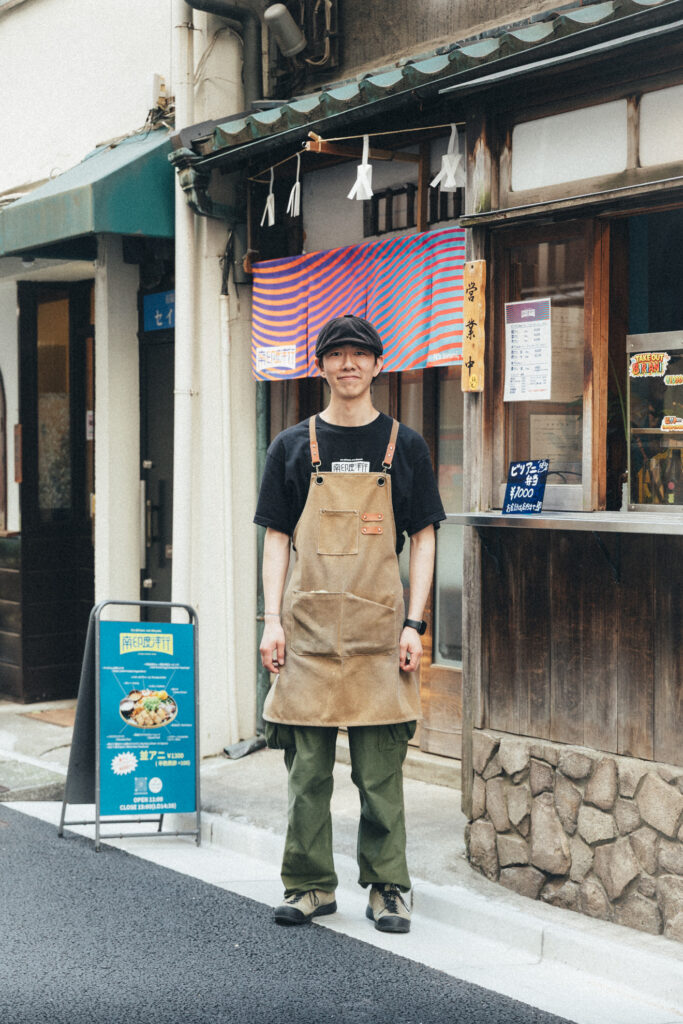
A subtle twist becomes the new standard
The eclectic world of “Biriani”, not "Biryani"
Life is not always fulfilled by arriving at the destination we once imagined. In Wes Anderson’s The Darjeeling Limited, three brothers set out across India in search of answers, only to discover something entirely different along the way. Ryota Hoshi experienced a similar detour. He traveled to Canada with the dream of studying French cuisine, yet what he ultimately discovered was something completely different. The destination he arrived at was "Biriani"—not "Biryani." By subtly shifting a well-known concept, a new standard begins to take shape. What kind of dish is born from an eclectic sensibility cultivated across borders and culinary genres? We sat down with Ryota Hoshi, the manager of Minami Indo Yoko Kabutocho Shop No.1, a shop currently operating as a daytime pop-up inside Omnipollos Tokyo, where he serves his uniquely reimagined "Biriani" dedicated to the Japanese palate.
●Today, you run Minami India Yoko as a daytime pop-up at Omnipollos Tokyo, serving your signature biriani. Before we talk about how you arrived here, could you tell us a little about your student years?
During my younger years, I attended a medical university. Under the umbrella of healthcare, I studied various fields related to nutrition and hygiene, focusing on the kinds of meals served in schools and hospitals.
But to be honest, what I really wanted was to cook. I dreamed of studying French cuisine professionally. However, my father was always nagging me to “get a proper, stable job,” so I focused my job hunt primarily on hospitals.
I spent my days brainstorming ideas almost daily, using ingredients sourced from suppliers, and constantly boiling pasta to pitch new concepts.
●So, did you work at a hospital after graduating?
In the end, I didn’t pursue the medical path; instead, I decided to take a job at FamilyMart. I joined the department that develops ready-made meals like onigiri and bento boxes. I was assigned to the pasta division, where I spent all my time developing new pasta products.
●Developing pasta for FamilyMart is quite an unusual career path. You mentioned you originally wanted to do French food, but when did your interest in food begin?
My father loved the outdoors, and because of his influence, he took me into the mountains a lot when I was a kid. We lived in Saitama Prefecture, so we would head into the local mountains together to forage for wild plants.
Looking back, I think that’s where my relationship with food really began.
●What was it like developing pasta for convenience stores?
Convenience stores cycle through new products at an incredible pace, often replacing items once a week. Because of that, I spent my days brainstorming ideas almost daily, using ingredients sourced from suppliers, and constantly boiling pasta to pitch new concepts. It was a strange feeling to see a pasta dish I developed actually become a product lining the shelves of FamilyMart stores nationwide. However, since I was involved in everything from the initial planning and pitching to tracking sales, it was highly rewarding. I would even visit the factories myself to make sure the final product turned out exactly as I intended.
●It sounds like a job you could only keep doing because you genuinely loved food.
Well, after eating pasta every single day for four years, I eventually got sick of it! Eating because you’re hungry, and tasting food as part of your job are completely different experiences. I loved discovering ingredients I’d never encountered before, but eventually I found myself wanting to cook more seriously. That’s when I decided to leave the company.
After I returned to Japan, I was still drifting a bit when the owner of Minami India Yoko, someone my mother's side of the family knew, reached out to me.
●And that’s when you started making biryani?
Not quite yet. About a week after I left FamilyMart, I flew to Québec, Canada, hoping to study French cuisine. I visited several French restaurants and told them, “I’ll return to Japan to prepare properly, but I promise I’ll come back. Please let me work here.” Then I went home… only to realize I had absolutely no money! So I never made it back to Canada.
●And that’s how you found your way to biryani?
Exactly. After I returned to Japan, I was still drifting a bit when the owner of Minami India Yoko, someone my mother’s side of the family knew, reached out to me.
They happened to be launching a food and beverage business at that exact moment, so I was incredibly lucky to be picked up by them.
●So you joined because you already loved biryani?
Actually, I didn’t even know what biryani was until that moment! I had never eaten it before. So it started with a “let’s just try eating it” phase. But the truth is, I’m actually not good with spicy food at all! Because of that, the owner handled the tasting, while I focused entirely on development, working with spices I was completely unfamiliar with.
●You say development, but it was your first time ever eating biryani. How did you master the dish?
The owner originally ran a stone trading company and traveled to India regularly for business. Through those connections, I ended up going to India myself to train in biryani. The president and I traveled to the airport together, but just before departure he casually said, “I’ve got work to do, so this is where we part ways.” And just like that… I was on my own! I found myself alone in Chennai, South India, wondering what exactly I’d gotten myself into.
●At least there was someone waiting for you there, right?
I’d been told, “Go see the master.” So my first stop was a stone factory, where I was introduced to him. The biryani I ate there was unbelievably good. That’s when I decided to learn directly from him. The biryani we serve today is based on what he taught me.
Of course, I didn’t just learn from one person. While I was in Chennai, I spent my time eating my way through street stalls and local eateries before finally returning to Japan.
●When you eat authentic local food abroad, it often leaves a completely different impression compared to how that cuisine is adapted in Japan. What kind of discoveries did you make during your trip to India?
The country was overflowing with so many different styles. It was a continuous series of surprises since almost everything was a completely new sight to me, but I was particularly blown away by the sheer diversity of spices. The supermarkets over there have incredibly massive spice aisles, and the entire store is thick with the aroma of spices. That kind of olfactory experience is something you just don’t encounter in Japan, so it left a deep impression on me. In fact, Minami Indo Yoko still sources its spices directly from India.
It's our own Japanese interpretation, so we deliberately spell and present it differently as Biriani.
●So, the biryani of Minami Indo Yoko was forged through an apprenticeship in India and authentic spices. But how did you end up here, at Omnipollos Tokyo?
From what I’ve heard, the owner was introduced to this place through a friend. By the time I joined, it had already been decided that we’d open here, so I don’t actually know all the details.
In fact, the first time I ever came to Kabutocho was when I started working here.
●What was your first impression of the neighborhood?
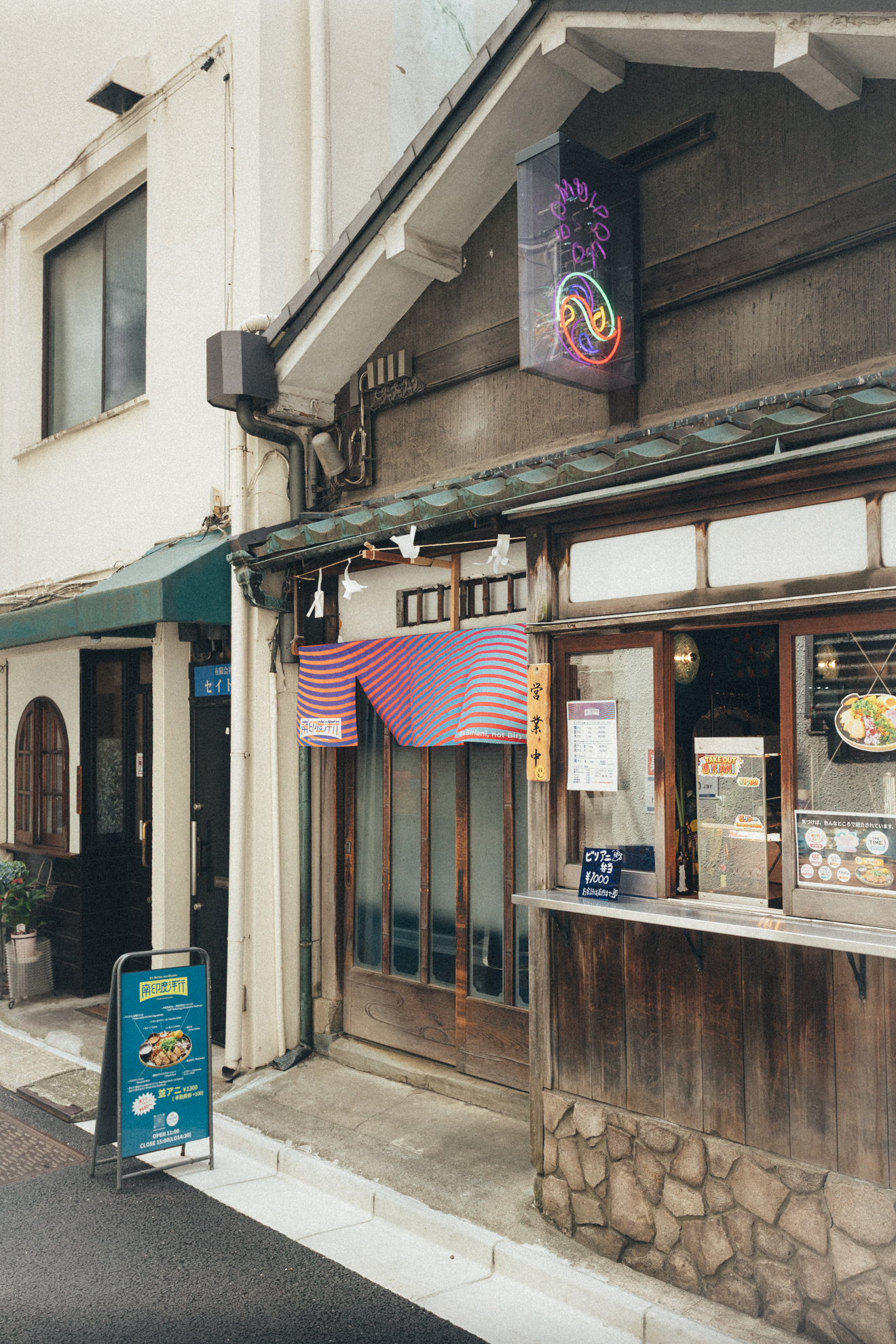
My first thought was simply, “What a cool neighborhood.” Though, frankly, my second thought was, “Wow, it’s going to be tough to cook behind this counter”. Also, while what I’m making here is technically biryani, we intentionally spell and brand it as “Biriani.”
●”Biriani” instead of “Biryani”? What kind of unique twists are you adding to it?
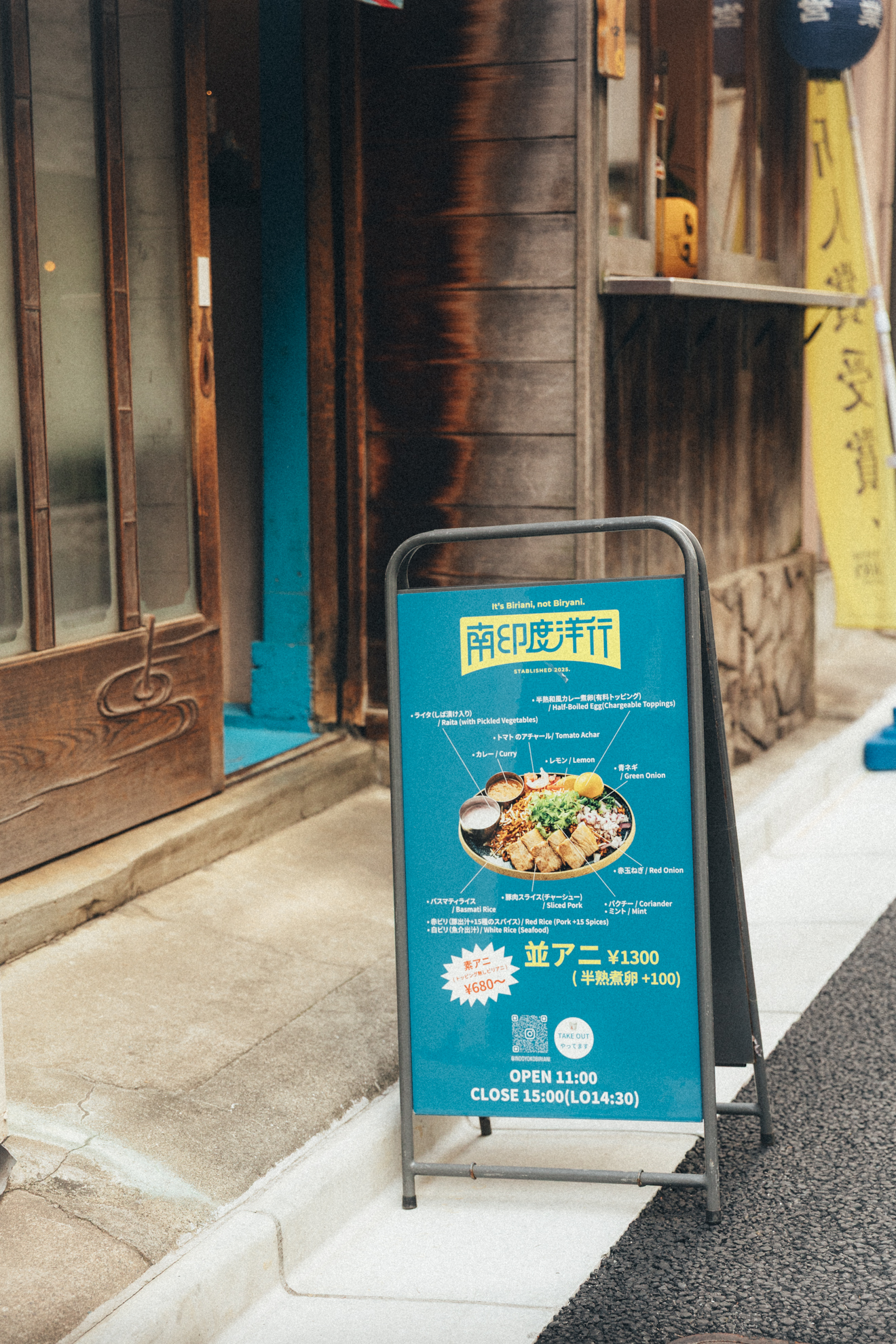
Because what we make isn’t meant to be an authentic reproduction of Indian biryani. It’s our own Japanese interpretation, so we deliberately spell and present it differently as Biriani. We mainly use pork, for example. In India, many people don’t eat pork for religious reasons, so if someone from India came here expecting traditional biryani, they probably wouldn’t eat ours.
From the very beginning, we’ve developed it specifically for Japanese palates.
We still use basmati rice, but we prepare two different batches, one cooked with tonkotsu broth and another with seafood stock. They’re mixed together just before serving.
We also use flying fish dashi, so I think the overall flavor feels comforting and familiar to Japanese diners. Our menu is built entirely around this one dish, accompanied by a selection of side dishes.
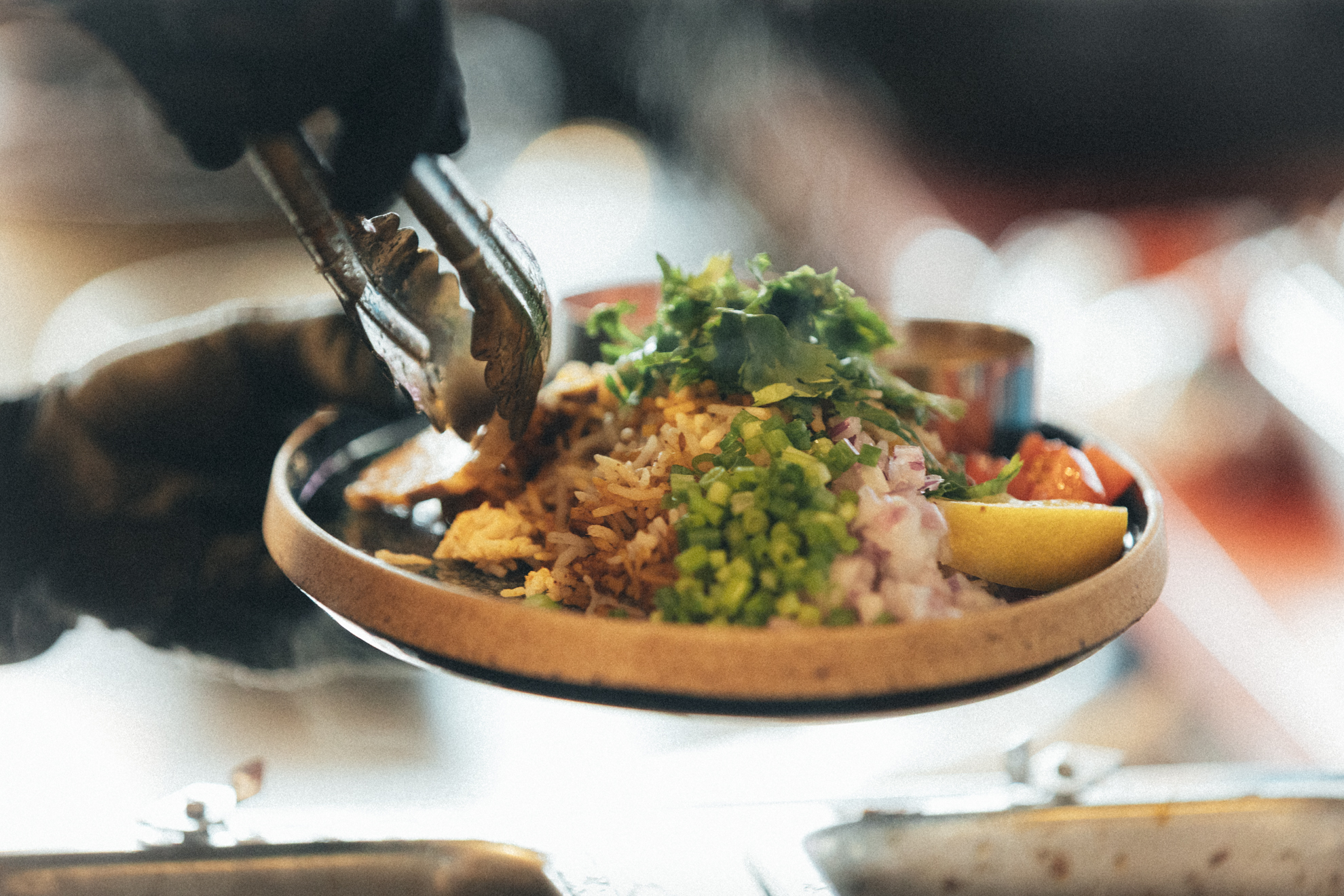
Even with just one item on the menu, there are as many ways to enjoy the flavor as there are people, and I hope our customers enjoy that aspect.
●I’ve heard that in Sri Lanka, spices are often roasted before being blended into curry powder. Were there any techniques you adapted specifically for Japanese tastes?
On a foundational level, we follow the Indian technique of tempering, blooming whole spices in hot oil to unlock their aromatics. However, while in India they cook the rice with whole spices left in, Japanese people tend to dislike biting into a whole spice; they feel it’s like a foreign object in their mouth and try to avoid it. To prevent that, we take spices like cardamom, cumin, cinnamon, anise, cloves, and chilli, dry-roast them before cooking, and then grind them into a fine powder using a mill.
●That’s fascinating. The way a dish is received really depends on the culture and customs of the people eating it. By adapting it for Japanese diners, you’ve transformed it into something entirely your own.
French cuisine is typically enjoyed as a course meal, with each plate arriving one after another.
Japanese meals, on the other hand, are often served all at once, a main dish alongside several side dishes, and each person chooses how to combine those flavors as they eat.
When I think about it that way, Indian cuisine isn’t actually that far from Japanese food culture. Dishes like meals (Such as South Indian Thali and mixed platters) also invite diners to mix different dishes together and enjoy them however they like.
●In that sense, perhaps the key is how people choose to enjoy a dish that offers so much freedom.
Our owner is incredibly particular about biryani, so the menu explicitly includes a “How to Eat” guide so customers can enjoy their Biriani without feeling lost. On the other hand, how delicious you can make that single dish taste ultimately depends on you. Even with just one item on the menu, there are as many ways to enjoy the flavor as there are people, and I hope our customers enjoy that aspect.
Of course, there's something special about expressing ourselves within this limited space, and I appreciate that challenge.
●I imagine that creating food alongside such a passionate owner must lead to plenty of creative disagreements.
Actually… we’re right in the middle of one! The owner travels all over Japan, so he isn’t here every day. But every couple of months he’ll come back, eat the Biriani, and tell me, “It tastes different from last time.”
The thing is, that’s because I’ve been making small improvements all along. Back when I worked in convenience store product development, I rarely got to see how people reacted to what I made. Here, I can watch customers enjoy the food right in front of me. Every day teaches me something new. Working face-to-face with people, that’s what makes standing behind this counter so rewarding.
●What kind of people come here for your Biriani?
We’re open from 7:00 a.m. to 3:00 p.m., and it’s interesting to see how our customers change throughout the day. In the morning, we tend to see more women. Since many people working in Kabutocho’s financial district start early, some stop by for Biriani before work. Others have already finished part of their day before they come in.
At lunchtime, we welcome plenty of people working nearby. One surprise has been how many people from food companies like S&B Foods and Bulldog Sauce make the trip here on foot. We’re incredibly grateful for that.
Lately we’ve even started having lines outside, which is something I’m genuinely happy about. Being so close to Tokyo Station also means we get visitors from other parts of Japan on weekends.
●It sounds like people are making a special trip here in search of your distinctive Biriani.
It’s already been a year since we started operating out of Omnipollos Tokyo, so I’ve begun thinking that it might be time to consider opening a second location.
Of course, there’s something special about expressing ourselves within this limited space, and I appreciate that challenge.
But I’d also like to explore new places where we can express ourselves in different ways.
We’ve recently started receiving invitations to participate in food events as well, so from a preparation standpoint, it feels like the right time to start thinking ahead. That said, it’s still just me running everything, so I have to be realistic about what I can manage.
I think it would be amazing to continue traveling back and forth between India and Japan, acting as a cultural bridge by leveraging the network of people that has formed around me.
●Speaking of recognition, you won the JAPANESE CURRY AWARDS 2025. Has winning the award changed anything for you?
Honestly, it happened so naturally that I still don’t quite feel like I’ve won anything! But it means a lot to know that people who truly love curry and biryani appreciated what we’re doing. Rather than becoming complacent, I’d like to keep quietly pursuing my own idea of Biriani. Oh, and one more thing. The iced tea we serve is cold-brewed Nilgiri tea from the mountains of South India. We’ve put a lot of thought into pairing it with the Biriani.
Not many people know this, but it also helps soften the perception of spiciness, so I’d especially recommend it to anyone who’s hesitant about spicy food. We also sell the tea leaves if you’d like to enjoy it at home.
●Lastly, could you share your goals for the future?
I’m naturally curious about how Indian chefs cook biryani, but I also have a strong desire to see how the Biriani I make now is perceived by Indian people, especially in regards to flavor. I definitely want to cross over to India again, and eventually, it would make me incredibly happy to have my master try my Biriani. To be honest, I haven’t even told my master that I’m serving this Biriani at a shop yet, so I need to properly break the news to him someday.
I think it would be amazing to continue traveling back and forth between India and Japan, acting as a cultural bridge by leveraging the network of people that has formed around me. I haven’t decided anything concrete about a second shop yet, but Omnipollos Tokyo holds a very special place in my heart, so I plan to keep serving our Biriani here in Kabutocho.
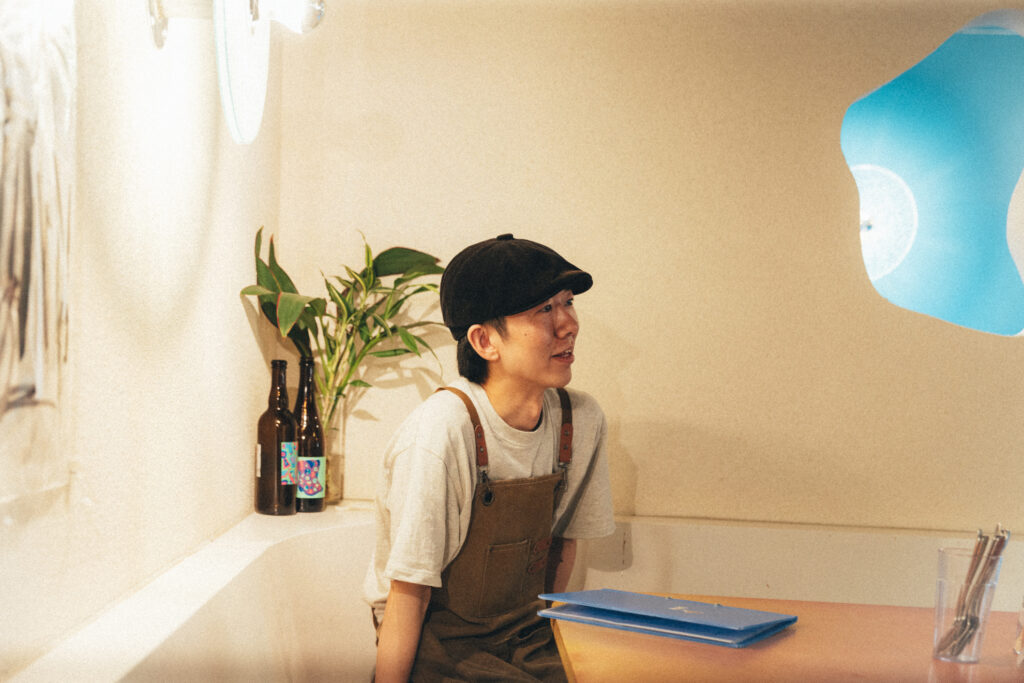
Ryota Hoshi
Born in Saitama Prefecture in 1999, Ryota Hoshi developed an interest in food from an early age through outdoor excursions with his father, gathering wild mountain vegetables in the forests. Although he dreamed of becoming a French chef, he enrolled in a university specializing in medical sciences. After graduation, he joined FamilyMart, where he worked in product development, creating pasta dishes for the convenience store chain. Later, he planned to move to Canada to study French cuisine, but ultimately abandoned the idea.
Instead, he joined Minami India Yoko under its owner, whose primary business was in the stone trade. Following an immersive culinary journey through South India, Hoshi became manager of Minami India Yoko and began developing his own interpretation of biryani. Today, he serves what he calls Biriani, his uniquely Japanese take on the classic dish, from a pop-up space inside Omnipollos Tokyo in Kabutocho.
His innovative approach has earned a devoted following and was recognized with the JAPANESE CURRY AWARDS 2025, an award established in 2014 to honor individuals and restaurants that have made significant contributions to Japan’s curry culture.
Interview&Text : Jun Kuramoto
Photo : Naoto Date
Ryota Hoshi
Manager of Minami Indo Yoko, Kabutocho Shop No. 1
Goro Sarudate
Human Nature
Interesting people in Kabutocho
Goro Sarudate, who prepares the food and desserts next door at Human Nature, is someone I see every single day. He has an incredible knowledge of cooking, and because he used to work as a farmer, he has an exceptionally refined palate. He’s often the first person I ask to taste my Biriani. We’re close in age, and the more time we spend talking, the more curious I become about him.